Darwin, nós temos um grande problema - as células estão repletas de padrões de design!

segunda-feira, janeiro 29, 2024

Design patterns of biological cells
Steven S. Andrews, H. Steven Wiley, Herbert M. Sauro
First published: 21 January 2024
https://doi.org/10.1002/bies.202300188

The central metabolic system for E. coli with highlighted regions showing several structural patterns. The metabolic map is reprinted with permission from Ref. [54].

Abstract

Design patterns are generalized solutions to frequently recurring problems. They were initially developed by architects and computer scientists to create a higher level of abstraction for their designs. Here, we extend these concepts to cell biology to lend a new perspective on the evolved designs of cells' underlying reaction networks. We present a catalog of 21 design patterns divided into three categories: creational patterns describe processes that build the cell, structural patterns describe the layouts of reaction networks, and behavioral patterns describe reaction network function. Applying this pattern language to the E. coli central metabolic reaction network, the yeast pheromone response signaling network, and other examples lends new insights into these systems.

FREE PDF GRATIS: BioEssays


Darwin, nós temos um problema: organismos verdes complexos surgiram há um bilhão de anos...

quinta-feira, janeiro 25, 2024

Phylogenomic insights into the first multicellular streptophyte 

Maaike J. Bierenbroodspot Tatyana Darienko Sophie de Vries Janine M.R. Fürst-Jansen Henrik Buschmann Thomas Pröschold Iker Irisarri Jan de Vries

Open Access Published: January 19, 2024 DOI: https://doi.org/10.1016/j.cub.2023.12.070 

Figure thumbnail fx1

Highlights

  • Comprehensive phylogenomic analyses for 38 taxonomically diverse Klebsormidiophyceae
    •   Three-order system for the Klebsormidiophyceae, resilient land colonizers
    •  Deep divergence, 830 million years ago—long before embryophytes emerged
    •  Evidence that multicellularity emerged in streptophytes about a billion years  ago

Summary 


Streptophytes are best known as the clade containing the teeming diversity of embryophytes (land plants).1, 2, 3, 4

Next to embryophytes are however a range of freshwater and terrestrial algae that bear important information on the emergence of key traits of land plants. Among these, the Klebsormidiophyceae stand out. Thriving in diverse environments—from mundane (ubiquitous occurrence on tree barks and rocks) to extreme (from the Atacama Desert to the Antarctic)—Klebsormidiophyceae can exhibit filamentous body plans and display remarkable resilience as colonizers of terrestrial habitats. 5, 6

Currently, the lack of a robust phylogenetic framework for the Klebsormidiophyceae hampers our understanding of the evolutionary history of these key traits. Here, we conducted a phylogenomic analysis utilizing advanced models that can counteract systematic biases. We sequenced 24 new transcriptomes of Klebsormidiophyceae and combined them with 14 previously published genomic and transcriptomic datasets. Using an analysis built on 845 loci and sophisticated mixture models, we establish a phylogenomic framework, dividing the six distinct genera of Klebsormidiophyceae in a novel three-order system, with a deep divergence more than 830 million years ago. Our reconstructions of ancestral states suggest (1) an evolutionary history of multiple transitions between terrestrial-aquatic habitats, with stem Klebsormidiales having conquered land earlier than embryophytes, and (2) that the body plan of the last common ancestor of Klebsormidiophyceae was multicellular, with a high probability that it was filamentous whereas the sarcinoids and unicells in Klebsormidiophyceae are likely derived states. We provide evidence that the first multicellular streptophytes likely lived about a billion years ago.

FREE PDF GRATIS: Current Biology

Novo estudo de Oxford lança luz sobre a origem dos animais

Fossilisation processes and our reading of animal antiquity

Ross P. Anderson, Christina R. Woltz, Nicholas J. Tosca, Susannah M. Porter, Derek E.G. Briggs 

Published:June 27, 2023 DOI: https://doi.org/10.1016/j.tree.2023.05.014  

Image/Imagem: Oxford University

Highlights

    The last common ancestor of animals is thought to have been small and soft-bodied and therefore would have required special conditions for its preservation.

    Limited availability of these conditions in the Neoproterozoic could explain the discrepancy between molecular clock predictions for the timing of animal origins and the fossil record of animals.

    We assess the availability of these conditions, particularly those of Burgess Shale-type, which are known to preserve animals with tissues of varied composition.

    Burgess Shale-type conditions are rarely associated with Neoproterozoic fossil biotas, but in the few assemblages with these conditions, dated to 789 million years ago or older, no animals have been identified, suggesting they had not evolved by this time.

    This provides a soft maximum age constraint on crown group animals of 789 million years ago.

Abstract


Estimates for animal antiquity exhibit a significant disconnect between those from molecular clocks, which indicate crown animals evolved ∼800 million years ago (Ma), and those from the fossil record, which extends only ∼574 Ma. Taphonomy is often held culpable: early animals were too small/soft/fragile to fossilise, or the circumstances that preserve them were uncommon in the early Neoproterozoic. We assess this idea by comparing Neoproterozoic fossilisation processes with those of the Cambrian and its abundant animal fossils. Cambrian Burgess Shale-type (BST) preservation captures animals in mudstones showing a narrow range of mineralogies; yet, fossiliferous Neoproterozoic mudstones rarely share the same mineralogy. Animal fossils are absent where BST preservation occurs in deposits ≥789 Ma, suggesting a soft maximum constraint on animal antiquity.

Keywords Burgess Shale-type clays molecular clocks Neoproterozoic Era origin of animals 

FREE PDF GRATIS: Trends in Ecology & Evolution

Darwin, os lagos rasos de soda são promissores como berços da vida na Terra

terça-feira, janeiro 23, 2024

Biogeochemical explanations for the world’s most phosphate-rich lake, an origin-of-life analog

Sebastian Haas, Kimberly Poppy Sinclair & David C. Catling

Communications Earth & Environment volume 5, Article number: 28 (2024) 

 Shallow soda lakes show promise as cradles of life on Earth

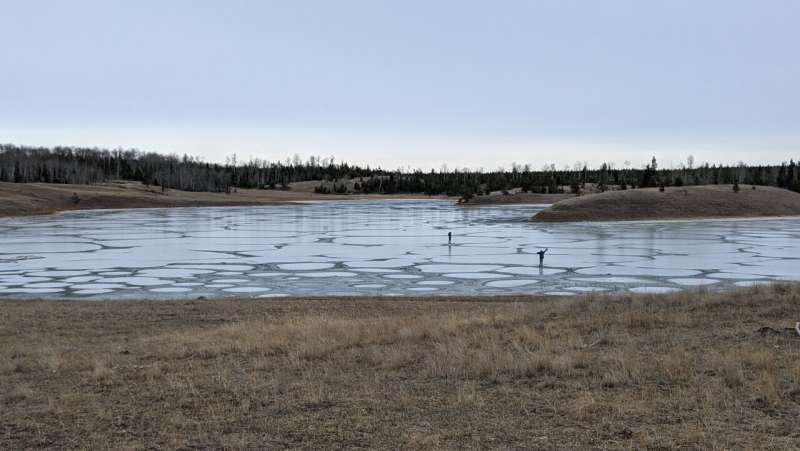
Last Chance Lake in western Canada in November 2021, when the lake has shrunk into many smaller pools and ice has formed on top of each pool.

Kimberly Poppy Sinclair/University of Washington

Abstract

Environmental phosphate concentrations are typically much lower (~10−6 M) than needed for prebiotic phosphorylation of nucleosides, critical for the origin of life. Here, we tested hypotheses explaining highly concentrated dissolved phosphate in carbonate-rich “soda” lakes by examining phosphorus and nitrogen cycling in Last Chance Lake and Goodenough Lake, Canada. We find a lack of geochemical phosphorus precipitation, that sedimentary calcium is in dolomite rather than apatite, and that N2-fixation rates, probably suppressed by high salinity, are too low to create significant biological phosphate demand. Thus, nitrogen-limitation of biological production and precipitation of calcium-rich carbonate instead of apatite combine to allow unimpeded evaporative phosphate buildup in Last Chance Lake to the highest known natural levels (37 mM) due to small biological and geochemical phosphorus sinks. Forming on basaltic rock, which was likely common on early Earth, evaporative soda lakes were consequently plausible origin-of-life settings with sufficient phosphate for prebiotic synthesis.

FREE PDF GRATIS:  Communications Earth & Environment Sup. Info. Peer Rev File

Novas evidências contra a ancestralidade dos dinossauros nas aves

segunda-feira, janeiro 08, 2024

Sexta-feira de fóssil: novas evidências contra a ancestralidade dos dinossauros nas aves 
 
Günter Bechly


5 de janeiro de 2024, 6h45 
 
Nesta Sexta-feira de Fóssil revisitamos a ancestralidade dos pássaros, com o esqueleto da ave do Cretáceo Superior Hesperornis gracilis, exibido no Museu de História Natural de Karlsruhe, Alemanha. Hesperornis era uma ave marinha que não voava e com dentes, um tanto semelhante aos pinguins modernos, e viveu na época de alguns dos dinossauros raptores bem conhecidos dos filmes Jurassic Park.
 
Poucas hipóteses na biologia evolutiva se tornaram tão populares entre os leigos quanto a postulada ancestralidade dos pássaros a partir dos dinossauros bípedes. Na verdade, muitas crianças em idade escolar dirão com orgulho que os pássaros são simplesmente dinossauros sobreviventes. A ancestralidade terópode das aves tornou-se um dogma evolutivo que é quase universalmente aceito e ensinado como visão consensual. No entanto, existem alguns dissidentes, entre os quais o paleornitólogo Alan Feduccia, da Universidade da Carolina do Norte, é certamente o mais proeminente. Ele cunhou o famoso termo “paradoxo temporal” para o fato de que o registro fóssil do suposto grupo de aves terópodes tende a ser mais jovem do que as aves reais mais antigas. Na semana passada discuti novas evidências que tornam este paradoxo temporal muito pior (Bechly 2023).
 
Além do registro fóssil

Contudo, a crítica de Feduccia à hipótese dinossauro-pássaro não se baseia apenas em problemas com o registo fóssil, mas também em evidências contraditórias da anatomia comparativa. Agora, ele apresenta novas evidências que contradizem ainda mais nitidamente a visão consensual. Um dos argumentos para uma relação dinossauro-pássaro tem sido a presença do chamado acetábulo “aberto”, que “é uma superfície pélvica côncava formada pelo ílio, ísquio e púbis, que acomoda a cabeça do fêmur nos tetrápodes”. .” Feduccia (2024) estudou o acetábulo em aves basais precoces e descobriu que seu acetábulo tende a ser parcialmente fechado e um antitrocânter (processo do ísquio ou ilíaco) está ausente.Isto põe fortemente em dúvida um dos personagens-chave para uma relação dinossauro-pássaro e sugere que esta hipótese deve ser reavaliada. O fato de que microraptorídeos e troodontídeos “também exibem fechamento parcial do acetábulo e não possuem um antitrocânter é mais uma incongruência, pois esses táxons deveriam exibir modificações “típicas” da cintura pélvica de terópodes para cursorialidade terrestre”. Isto poderia apoiar a opinião de vários especialistas (por exemplo, Martin 2004, e vários estudos citados por Feduccia), de que estes táxons maniraptoranos representam aves secundariamente incapazes de voar, em vez de dinossauros terópodes.
 
Feduccia concluiu seu novo estudo com esta declaração notável:

"A hipótese de que as aves são dinossauros terópodes maniraptoranos, apesar da certeza com que é proclamada, continua a sofrer de dificuldades não resolvidas… Até problemas como os aqui discutidos — e muitos outros que continuam a ser descartados quer por apelo ao “consenso” quer por excesso de confiança nos resultados da análise filogenética de dados morfológicos - foram resolvidos satisfatoriamente, o ceticismo em relação ao consenso atual e a investigação contínua de hipóteses alternativas são necessários para a promoção do discurso crítico na filogenética dos vertebrados e na biologia evolutiva."
 
Afinal, pássaros e dinossauros podem não representar pedaços arbitrários de um grau evolutivo, mas podem, em vez disso, representar tipos naturais distintos. No mínimo, as evidências parecem ser muito mais ambíguas, mais fracas e menos convincentes do que a maioria dos biólogos evolucionistas gosta de fingir.
 
Referências
 
BECHLY G 2023. Fossil Friday: Fossil Bird Tracks Expand the Temporal Paradox. Evolution News December 29, 2023. https://evolutionnews.org/2023/12/fossil-friday-fossil-bird-tracks-expand-the-temporal-paradox/
 
FEDUCCIA A 2024. The Avian Acetabulum: Small Structure, but Rich with Illumination and Questions. Diversity 16: 20, 1–28. DOI: https://doi.org/10.3390/d16010020 
 
MARTIN LD 2004. A basal archosaurian origin for birds. Acta Geologica Sinica 50(6), 978–990. https://caod.oriprobe.com/articles/7989071/A_basal_archosaurian_origin_for_birds.htm
 
 
https://www.discovery.org/m/2018/03/gunter-bechly.jpg 
GÜNTER BECHLY 
Membro Sênior, Centro de Ciência e Cultura

Günter Bechly é um paleoentomologista alemão especializado na história fóssil e na sistemática de insetos (especialmente libélulas), o mais diverso grupo de animais. Ele atuou como curador de âmbar e fósseis de insetos no departamento de paleontologia do Museu Estadual de História Natural (SMNS) em Stuttgart, Alemanha. Ele também é membro sênior do Centro de Ciência e Cultura do Discovery Institute. Dr. Bechly obteve seu Ph.D. em geociências pela Eberhard-Karls-University em Tübingen, Alemanha.

Veja papai, veja mamãe, sem mitocondria!!!

quarta-feira, janeiro 03, 2024

Genomics of Preaxostyla Flagellates Illuminates the Path Towards the Loss of Mitochondria

Lukáš V. F. Novák, Sebastian C. Treitli, Jan Pyrih, Paweł Hałakuc, Shweta V. Pipaliya, Vojtěch Vacek, Ondřej Brzoň, Petr Soukal, Laura Eme, Joel B. Dacks, Anna Karnkowska, Marek Eliáš,     Vladimír Hampl

PLOS Published: December 7, 2023

https://doi.org/10.1371/journal.pgen.1011050

A protist - Dan Wieczynski

Abstract

The notion that mitochondria cannot be lost was shattered with the report of an oxymonad Monocercomonoides exilis, the first eukaryote arguably without any mitochondrion. Yet, questions remain about whether this extends beyond the single species and how this transition took place. The Oxymonadida is a group of gut endobionts taxonomically housed in the Preaxostyla which also contains free-living flagellates of the genera Trimastix and Paratrimastix. The latter two taxa harbour conspicuous mitochondrion-related organelles (MROs). Here we report high-quality genome and transcriptome assemblies of two Preaxostyla representatives, the free-living Paratrimastix pyriformis and the oxymonad Blattamonas nauphoetae. We performed thorough comparisons among all available genomic and transcriptomic data of Preaxostyla to further decipher the evolutionary changes towards amitochondriality, endobiosis, and unstacked Golgi. Our results provide insights into the metabolic and endomembrane evolution, but most strikingly the data confirm the complete loss of mitochondria for all three oxymonad species investigated (M. exilis, B. nauphoetae, and Streblomastix strix), suggesting the amitochondriate status is common to a large part if not the whole group of Oxymonadida. This observation moves this unique loss to 100 MYA when oxymonad lineage diversified.

Author summary

Mitochondria are nearly ubiquitous components of eukaryotic cells that constitute bodies of animals, fungi, plants, algae, and a broad diversity of single-celled eukaryotes, a.k.a. protists. Many groups of protists have substantially reduced the complexity of their mitochondria because they live in oxygen-poor environments, so they are unable to utilize the most salient feature of mitochondria–their ATP-producing oxidative phosphorylation metabolism. However, for a long time, scientists thought that it is impossible to completely lose a mitochondrion because this organelle provides other essential services to the cell, e.g. synthesis of protein cofactors called iron-sulfur clusters. Detailed investigation of the chinchilla symbiont M. exilis documented the first case of an organism without mitochondrion, and it also provided a scenario explaining how this unique evolutionary experiment might have happened. In this work, we expand on this discovery by exploring genomes of multiple relatives of M. exilis. We show that the loss of the mitochondrion is not limited to a single species but possibly extends to its entire group, the oxymonads. We also compare the predicted metabolic capabilities of oxymonads to their closest known mitochondrion-containing relatives and map out various changes that occurred during the transition to amitochondriality.

FREE PDF: PLoS Genetics

Se não existe design intencional, por que buscar inspiração na natureza?

quarta-feira, novembro 29, 2023

Vision-controlled jetting for composite systems and robots

Thomas J. K. Buchner, Simon Rogler, Stefan Weirich, Yannick Armati, Barnabas Gavin Cangan, Javier Ramos, Scott T. Twiddy, Davide M. Marini, Aaron Weber, Desai Chen, Greg Ellson, Joshua Jacob, Walter Zengerle, Dmitriy Katalichenko, Chetan Keny, Wojciech Matusik & Robert K. Katzschmann

Nature volume 623, pages 522–530 (2023)

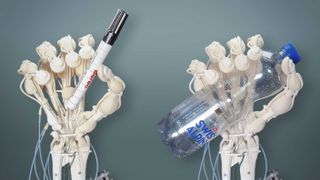
An image montage of the soft robotic hand holding a marker pen and a water bottle.

An image montage of the soft robotic hand holding a marker pen and a water bottle.(Image credit: ETH Zurich/Thomas Buchner)

Abstract

Recreating complex structures and functions of natural organisms in a synthetic form is a long-standing goal for humanity1. The aim is to create actuated systems with high spatial resolutions and complex material arrangements that range from elastic to rigid. Traditional manufacturing processes struggle to fabricate such complex systems2. It remains an open challenge to fabricate functional systems automatically and quickly with a wide range of elastic properties, resolutions, and integrated actuation and sensing channels2,3. We propose an inkjet deposition process called vision-controlled jetting that can create complex systems and robots. Hereby, a scanning system captures the three-dimensional print geometry and enables a digital feedback loop, which eliminates the need for mechanical planarizers. This contactless process allows us to use continuously curing chemistries and, therefore, print a broader range of material families and elastic moduli. The advances in material properties are characterized by standardized tests comparing our printed materials to the state-of-the-art. We directly fabricated a wide range of complex high-resolution composite systems and robots: tendon-driven hands, pneumatically actuated walking manipulators, pumps that mimic a heart and metamaterial structures. Our approach provides an automated, scalable, high-throughput process to manufacture high-resolution, functional multimaterial systems.

FREE PDF GRATIS: Nature 

Não saia de casa sem informação: ela é importante para sua sobrevivência.

Semantic Information in a Model of Resource Gathering Agents

Damian R. Sowinski, Jonathan Carroll-Nellenback, Robert N. Markwick, Jordi Piñero, Marcelo Gleiser, Artemy Kolchinsky, Gourab Ghoshal, and Adam Frank

PRX Life 1, 023003 – Published 17 October 2023

 data:image/png;base64,iVBORw0KGgoAAAANSUhEUgAAAQQAAADCCAMAAACYEEwlAAACglBMVEX////MsMvWv9XgzaPiz6fp6enk0q3l1bPj0Krp2rv29vbs7OwAAADj0avo2Lf5+fnr38OpsbXY2Njv5M6ZmJjz7NrAAAAzUqTOzs7w6NPe3t62tbXCwsK0s7Pt4ciCgIGqqakAosp5d3iSkZHJyMi/vr6trKyIMIH28uaVlJShoKDhy514mqcAnMSzi12GlMPswMTosrfU2Oi4wNqQntGkrtktTIWDrxqvyn3cydvh69LP37POuYzX08oAqs9samsAe5mUpa3dAACm1usAj7F/kcpfbo/1ZUz805mlbqGnxW7HzuLECSnMPU3ciJD34+Wej3GUiniEeWZ2b2SqpZoMO3p/nqqKy+QAcpA8fJFzwt73mXqgq9erAABSuttoiJS32qL2iWvKAAA2i6cAUwDnlgCc04FBWYf3vma+dQD626xgkqOQt0GCb6u5UXe5pX6zpYrFtpejk3Cbk4bZzba9s6BuZFNSTUWAe3DEtJOShWweMTuNjZFeXF1EQUJodKJzeowlISIARhV3lHAAUgsYbjBGjyiNoohorUpMYkVnvEU0SVOhaxeLTgCEyGUAWnSLZjTYo1ROejZVbXf4STSjJy34s0eoFBsiTT0ASW4AKWBRcLprmlBNXX55ssc4cHdFabVHf1CbXmCZsoMAACCeWkgoMVRMoyEAagZxOgB6JCMuZ0RGhDKW03eAiaBDYndah1pJg3AAdn9PYFeaQER7XWeRIACpiIhnN0GtUUHTPySKSVGSLDljTS35yIDsclz5uFOheznEaFfGomxVIygsQU0AIQBRVwD6OTCCMwCvcnUAJSEVAAAyRhhaXXNtll4yPixxAAAUQZx+DXazf3OteqlZPp5XAAAgAElEQVR4nO19jX/TZp7n0wEBlVKEhSBCkrFsS5pYienuTMh09sCRE4eku3s7CQlxZFI54Akl0e4QSNJhqEPhaMM0BMI2lG4b6lK6Q+gObWgLy3Z2jr5d73q9aZnbvf1/7vdIcuK8wFJixSGd7ycfW1b88tNXv9fn+T0SQosDzQltfX1Hjhxp7mvzi8Qiv+2RhNh/ZEdlZeUqG7BxqFn9nvFAq8073OOfBvDQz5RasCWE0OwwsHoGDg+H+qlSy7ZEIFp25BlYl0eeiMoj/lKLtyRQjlQ6FKx7Ys0Taxw8sWb3sd0OCzv66VJL6D007AwcCgBrXfT9av2v+p5waDi24k2C3WGrgU3B2mms7zu8/nDfGmwWwELzCg8TLgcuBesxHrcfd7fsXgs7XRZWtC74bQ6wGtgMPF6I9evXrl3zhG0SlcdKLaiHYA7ZprDG4cA+9A0Y8Nzf32ezsMZhob/UonqHY5WOHrgUbCgAkPB4AQs7lFLL6hVYm4N1hRxsdbFhcHAQm8RabBKYhSNkqaX1BvyhI6tWNz+x5nDf+j5Mwdb+lv6BwS1tGzELgy0tG2zHcOxY37q+1X2VbKnF9Qb9lcd+tWr3mvWHW9e2YC0YaNsyMNC28eiWjRs3bj26ZcD2DS2H1+8+fGzV7lWHVmSc5A+tOtbcd6yv5fDA7v4NR1vbBge3bBk4Oti6CbaBkI1bN7S2Hm6BnKHvub7nVlW2lVpgL9BWuWr36jW717f0HR74JRjAxo2tg0cHBjcd3bRp05ZNsI1dw4aB1r7Wdc1rjkEVsRK9Aq4cITo2H17/uO0RN27cMgBHb2PLlk0DYBNbsUUcXo99I4RJodQSFx8y5EmQKa4Ft/i4y4GtBJvyNIBr2GrnDJiEdatXZK4A1rB6NWRJ6x/PcwA2AEdfUVHhspBXBZwtrMNRcuWVk2ANdp6UJwE42NRW4aKABYcEbA87uFLLXGyQRxxrcEkADrZsGmwb3LSzQsnTACzkVWHNGkiYKlfc+ArvuoS1M4qws79C3ClUBPLK4HoFhwTsFFZckMz7xQJrGNxZUbEzJNVSEu+qwrQ9OCT0lVroYkPBdcO0X7Td4qbaneGdCgqTlDDbHlzPWNlcaqGLDWFWcMDxESBWVFCIoPxo2h4KSVg1mwQZJ0/50Rb6kRycX4iECogOEAYZYed8Ep6YTQKvaQrHcGJAlhhBkiIUJ7CPXkY5zxwwCbVAAk4G6HtoQsBBiEJZFBZlWWBETmQjiOU4SUWPXhohLuATKiIVWBVouqLQMc74hALHqBG1CidlGSnAB8KIlWV/WH70ykxufnTYtLNtZwVfsXM6X7pPiOTFAI0YAjEUTxCIIkmSegS9AnVoOlnKk7Dx6Ka2nQIKFyRL0yTg0aVCEmhlRQxAN+OhtemMEViAPGET5AlttRWCmzfPFA+2S6icN8746HmBOWibUzts3GJrwmBFeOemtk2zFcEJDrPGlmj8BxYQLtkBFAP+ylnFAzaIgf6dW3ZWFHKwtaCUnpUmcEKEU1VWEGpLdgDFAHEobw8z4wmDdhE92LbTHU5wkmbbGuaUDooY0BCC6PhoawLqr7Tn3+zhdpeFVjyk5IyouHpQMJywo9D9S0JA1iRJlkIlk78osNOldU6q4BpEq334DgWFHNiFdEupBfYEeFhlJkDgeZdBO2vashE/5zlwk4SVOgfln5mEc+afWgeObtw6sHVr60DrgMuBGxpWr9w52WOOKuRZGBwEZehvaYPngX6XgrwxrNohllpaj8AdcnsTHBYGWsAejrYehee2wQIO1q3saWl7RtbVBaChr2VwA7aCwZa+DTMdCutWeptGSyEL6x8/vMHpz5imwOYAJ4srbqC5AFRzZb5jCdPwXEGbik2By8EOtdSCegr+SCELz63PY61DgdO/tkMrtZgeg292uhjX4aadw+un+9fsbsZ1DgdSqYX0HFRLvpdz3XN9z62ZgUtB5aEVOBE7H+wOh4bmw2v6+sAEbALW5ft6mx/BEaOHgdyMW/xX9/U90fwr0IiCFu/KQ9ojP3DywFBtGnYfO1bY446b3PlSS7akEJoPVVbuKFztsONI2/eLAgze3/dLvPYFY8eR5jbx+2MIhWCez/pFwe8XFOaRmk2StEDx5jyqEmwg8EgdvoMsIr+z1hIoIgm0H3GImB4oCWeRgKqiPkQFQo/cTFIAKd85p61lVBShaikJafk2VZILM5xNAmxnQ7Mc4hzvyNh/ywpKhP3OLlxDQwGV4sJ+VKvJ7j5qCM5/VdBnvyAjtfhLZQVxCsPwFKcgBd5IqCSp0gwhLosOX/W7H3ghIoSEApRMHhcYKuDsIoZCcJSOJthgQb8Uls/KHKtyftXP+AnEcSyLeDa8LIbZBQ7J0y80+T7vXBgkQSISXAlFwba7j8C0FpCAd0kCI3G8pnKyIBEKjwJkmEUEELEcSGALXCH1wq7ifXHeHFxosswQFMcQPENKfoREQeA1iuP835334oMJE9NWeaKhoXjF/hwSliWOZ3nJ3iBmTsWehuriqcKjQMJJlp4O4awb4T0mgXCzEGJWVHSkYEoy9spzWWdDruX/2yln00sSNJYayioSS6osE4iQGqsqjMYpqhJikChxIIW2hONuJKMIcR8aGspHxmsvvjTsnCKXBKI2jBY/ADSHBIHlJZFUJMWPGE5gRAmxASWsIXzogkRqEh/RHnAUmhDi7e1x38NGdsZXZeiJYDCYAI1U3QM9/euXR8AeiOwZw6qyrCHEE8fJxWvnbBIITeOyAhcW/LhRzc+IGgprBBNBLEsikQ9rLK9xD1Rp8OlcfX0yY7Wz0lAauJjd6sP5MEHCPcWX242oaZoxGwY52n3WYZ6b7Dp3Wq4a081Usj6ZxnuK0SwxRxMYkuJJnicpksd5BUkiCnE0zjEIyLPxE/FAp1bIpJK5wDPOPJ7SEQxGdcOXD/MCEJRMpjKZsfGFsnHaZ5guYsGErhutPef/ftT53ysHnjKixjiwCsBfFTpehOrfm+igJMzc+P69F151XpJjoNbBaIeEX/BpOIv1Vjo0pQcTY9l5n/VZKQzTzBhjktMjeP5ibzeeE1SqMkaHNWuG9OELYJpGNDKwNqGqmAckkLqZ5tFrjfvqXC+a3aPbNBgkUkBHksl/wMIrrwdj0fHZH+WAIsxBJv3GC50T37o7e+409ShxYCcTL1a9ywYEnqMSGaxInpAQT9TA0ct1+xo3uzI/O7ErYdu3lEilktalS3jnmxO7osHorGjD5oChZO4tiUZqeXXn5RPO7pbupt3wH+vt00WTMVCrgq07JLR7QULHruo9cPRXLuytcxeNMOXVT8J5jyUyZiplvPlrfDCRy50NV2MxveDcpsGZAgXvjNyAF2x5dfVlp9qjz1pAwUtPHRguWqLCoOPISxKof5zYPvEmPD/T+Ju828pObG+4mjHB5aWsq9t/K9i8VJcLRiyWzn+OBg7AW4QnD3SN4Jwoe7mz+nX73Gu5ektCp0dO/bpoqqDUSjYJeNsLEvxkTUPnZRV+Q55x3TUN2998eSpomrnnJ7bXMPaOiROIT8QS+XiTToLHrKKQNtnVNYId4YnLnS9MgqzZZH0a9IWYfOnFa0XNWYGECMuy4x6QUIvE8s6GPbbjFre5XYDMG9UvTI7HTDM91dAJ/zsBqlEDHFWZZrvzDg08Zv0UTov6R7puTOLPvfz2iUuTCnDgBJHT1xS2qAkrkEBQFOmFY/wSoW/BIHAao3R3v+ue6NPD3/5aj5mZ+vpd1c8i8QwYA86A/gl22XQxYPbJdMMe/PZTIy80XMWh8MZI14HfJpNuIKXKUHH7ir0zB6YDvn1PdfWLUPj2jzZfPO/spq+/dzoYM636ZK7mfXI43VmDD+12HbgJ23umcdhw1QO9MgWqBDZDv3LuVDI57TUggwtIkeKJ6h0JPh0e2DPVN65DxgARvtuNEPLkB7FYEAw/ZfhvnPv27VdgH7//k9+YKTv/jUJ2EMaOAlwqor8EOvbgYbDfpmY4AGhFnR6gMhmGZ/h08Umo6sCP1y+dws5N6O692MOJtkmc/jAWywg4G/wItHwS7/v9hb37M6kMeL12HDsRt8dNDqg9DbZSyLmkVXjcEoGKOD0AJPgFQfCABAPXfbjWOTAJG9s+beruCCY64lCAdMRiFqi9aeoHuiZxO5BWt7fxNUgEQQYdSgUoEFUcOPG/mD1YKfhMyppdrAS0IvYRAQn4yQNz0IO2/p4e6Tr3NqKNnqbzQZws6j4CksY46D1Uh6fO4USA2PzJvjpRwAovQ9ww8OGduAx2gD2mWA4svJUyvewXITJeJUtQF+ExMHIYcp7wzVsdum61x+NxX/zLICYBpYGRD4exjt+8sPfCFURayRwfBxJu1WEW3gRv8CLOBqTy6qmUOb/CKiLyJJgekBDUsUEIYBD/3LjvVTcvZshxIAF+jdChQsbOUgJjeIZEt28lk74qIOE3jZgFnGnZThPKLtCOYks3C0ACXuo3XnwSrGAwpuNx4RvnuqCSfMbhQNu//19ABfD+digoIUGisDEISKn7OFnfDulz7Hd7G+skiBg//+gjO23mM2bG23YJwvUJxSfBByfcTLTzSL52AEh4zdn78d59N+FAh8AMeNAViCD/ahsDsblxX66+Xofi6tULexs3g3oqkDZPQmZomEGPG8iIjOWROVCQF0KdlLPSxviJE9kTcR8+/a/WNV6JxaK5NLBg4JFD5SxU2hSCI79wq74eHIVOw/bH+Bv6cQTl2gtqK48AJOAnD0jA40oQ9JO4HILMCCJi0KAReXvz7+FsQynk2EO8586hf5bQla/AL2i5ZFKPGYi+8rVjO6dGut67FvXYIQCInFUbCoU88AmQGxq5VDL36m+qkikrk8Eh0UdziA7B2a7H46NxIOG/X+z99Dxi6/Z9UucbDSSTVhROCt/nrDyDbLlLj+me908BCfgp7gUJeDi5HZLBzeMcQdKMEQv6jkZsZ2FVgYJoSjQYHG2600NxZ8E3Rj67+AWkkR0+xPV0jzpegBj+IJbwft0NkOCRT3Bg4cDgFP++YPCt4Q+EkD8IGgG1Ym4cHOPB3m6J6jnY/LsrQxd777QCCyzizm779DPn42w0GvdGsEJ4qwmI0ev2NV5xtsVo8INLL11jmahOIiaXzI3FEqO9cLifgUl8duurz7/oHrPAdaTR6ME7PfYoPOGmnR4DSAizLJtOeUNCvKNu71d2eSAiJhHUT527gcgxrOCqoesJbAzEse7egz236vbte6Y/MZaBiGLUXuzttr2CsSQcYBLwwvd2j0io+heoD3lEn6hWEYlzyBdlWpDgH0zaDI5ljvR2t/m7m+50/4+6T/bW3Y53cByuoII9TQd7eJ5LR5eEg7xPiHulCb8Hl4CH2jvft/MCyAxej+AOsVwqNmaa0W0fZXRAx7dXPq/7mv8SkgcqDfXVR582PRdNvO5M03iPvE/wiAS+4+OPaxFXXt2wCzwjRIOgDrYgWPXJjJ+Bo+3IT7RB7jDmzifycUP/8ow+9nx8qToAiFyVIsuyVz4BpU0zQ5yY2D6BY15azxhQHuNJWotB1BRwYpgZ3cDKYFQVTkhSFLGEPRAuCdnUfSMRxXHcw43kEJlUKg0FYY3zqo3CvCSTH5xClJXsCMaiy6GPFkjAT2LKuvd7wJFHo9GE/lALIFQzZV3ubLDHA8h3u3v4eCyV+4ef/1xOQ6YA9ZK+DFYcErl2+6I6Vupe62C5jlhQNwwgItjxMMmbaiWf7axROQZPK5/vPp8wM63XVG4IMuepb/AExCKkLxJ4hwQUnz2QOQMhEdNVfLZIwQgmHmbOg/Klp3KQG1XthoTg7HgsI6P/SZBV9fW7nrz7gemOtHsKJm4ZhhW/Z2+NmHQnftLJ9AwLjCq5n5ATBYVsNpp4SIkJQspZOCEQ2vH4K498yXrrjWvD/wtcxj3YLxoYA8IQHt+MGvdozY7Xux6Rt5KWq+3MybKh2j+U4eOl9VnFfDbY8dAmHD965053Pxp3OhGgdshGbu7/6mOotb2tDlSoQ6sEjlPadXNhTeZzubyS8GmoeHH/C1t2BnfBjJeFfL50bHYxbyxigGPqi+5tCJ3R8TaUDlZPT+O+vftOJJNVXvpGKRFMu99PpoPBhVhIF87rBJwOmTJcxeAEpixjxoKzfSGX0B9aeX1mJo7TRsy6L5UKNO34vPGr/TchafCwkZRJRAsGqrVgYl5jMplOWgXhXyNkX3x86Hh8PA4Yj9c+n26fq6p69KHbm+mMGVVAl/BXtqdSzQcv/u9XVV6srU/eJzwvFnNUNztHsxElgRso9JgsVpvILwVkX1UvgKiyyLzMYDEdXppp6pQFYvSPGqnU6Ggbw339TN1rkC94NnbERWdrLvg4w5oFyOVm/TomgQ6fZFAEsxFAqOy4f6548eAi3Jhhxiwjpred7YaKWeL63q27AF7B8nB6qT3YPntH3J4Gi+WbA82cNSfe2VO97HExrwlkWVaWQqGAWrBCrn0xJHCJmGnEEj13zgMJZ7s/3bZ37ycX6oyUV8NaQHt0bg4oq2FZ5oY4WZaysszMbQLlQqoiCLVDQ2KtKgjCkJg9GfLjyMr7s7UhTbZ9rDU9BzA/5vLTxsPfw3vGTTNlRL9o6k6Y5pHe3juv1T1zm68yTc+CpJ6YZ2k8PvWBwo0CSPbQOBhoWS7p9FGWGebM3A8hRkK1WaEjkfekDCHKosZwsh9xKicjiVFJRUGCzMPXU4KIFmrXxS0YY190j4ImtHza3dPCIeb0W2bMs6TxXiTgC2Ux+Y0CtNdXQUxob2+vLRvHLcfpk8fbq6w5qX2o48tQQLLNQxN4jWECSNCYLCOzEmL9ihaWGF6iWYFXQsSCiQmUTcnPRikg4a1tMuL7hydHPojNl7RY0KPzcmUCq7KtCXhjDglKLufaj1p2PMwOleE3QpgtDInwUkQ0LwQUTAIFJLCkpjD4GUhQBZkQMQlhRWLC/ILVVtpI1iezyIrFElz82fKJXeNdb80NW0VEeq4L4ywLhwc7RKTjylxzQGx9zrVzWg0ENEfts2Zmhku+MIlmeJIhwWdInMxQFEdrDI/8KlJFUpN5SuK4hU6vYpoGWF02Dh56z0RD5/bqt0c+nJ/AFA1CtGP2DiM2AwgOmTNzP5Gur5rv0NJmJj+OIEGQXVzTGAHhMDoOFoFrGr2zs+Hy/7krjFUt6jvvj46gVPhSiOqKmIcSB6dnzDlkMl2/QGWAB8jafaIPT5unF1fwEVCegJPJgufFZ+T1ml0CjbJDi/rO/wT+qF7gFRh9TvEgZOaxwOeSC6QtihG0R0KDxqw2oQV6hvDqiPv4OL6qHo4eflOBPG0M93kLjGKM3/sDxUA6qE/HHkWPzf01wph2/ZzgLEnxJeckWO6/41VVVfE5lstKfk5SRFUGL4iIcIRkNYoLyFyEJdgF160SFl4Ew0NOWlb2pWV24H73aIfns2zj0aiBj44UjWhwPuNMJiZh25CzZiplVYHasAuTsCBYpPFKgNOIkKAhhuM4IcAoEqVotCaQAuJqw8qssVkK4kJ9TmTKfqnwXPYPX2b016+eEZZgmFXTg1E8nh2N6QsxHjfHsfSamWu3csmcZSVzDz6KGObCYb5W4cMRhkF8hFXFkChohKKR/rBgt2zJbKiWlfOHiVe6JGtqymoAzw8Pn/xmeHj4w0U62gcDFTf0RELXF14pwjvtrL5UO57ysHI56zsk8SRBI4KmefsKAwykhzyiaBLhP//McmJKDEPKzZFAOJCwq/r5b6sxXrjxTtlTXV2nYl5GhkJh+Xtl8ghlotiPxZ3cnWYe/uoI5KyfIOZ8ESGEh740csmphoayBhvjlw788caBA5eiDz9GUzRYpsQwTLt3Bcw0DDNjnRl64+rJXRgf3b179+U/3r17I+F1T9YDiRZWBCXtPQkc7l/Cs5DHp3epUMXSidiDe2KvYNgNhXHvSWjH7brPAv6AH16+BPjjN5cuvZKIeTi09oBYMhIMIOEF7AxOvum6hANldw8c+MuEh8XTg8vmJwhiCUjAa12csPCH9+HxxN2u4y93dXW9E10WJAQ0TVoCnwCaMFVj42rZ1Zpvhq+XlV2HPOG3sWVhDri6WAJNsGLTv0GETpb943E7KSMSsWVw8Yol8wm+mNm6zcXtmzdvfv01PNyEUjJRxAUsDwkjptAkvQQkULq5+6CLVxsd/G7K9L5t+QFgxEKRSGR8CZKldtNoclD5+T4bn2egQF8OLRquT4h5TwKpmz0u/u9mjFt46iOxHC4KbQRtn7AEJCA5OhYn8eUKaHy/Kbz+HzhYFrcLcKaIl4QEpOY6dMu5topi2b3/meWgB1Q6GhsKhALjZkZagp/zG+AFMpZPwS3ueLCx9IHB7shK2M6ZMZbGSzPjOr46SM6e6cosi2uDM3rMyI+Kqhnvl5dgsGNGDq+Eqc9NLYeruCG6o3DkFRjxdOWhC5/lLAdKV9Xn2pXSXw43Hpw1NyMnvJsQzIMwnDVR4xZWhmTyPk11SwN6bt9N2vPhDSWDF4bl0jLlq3L8Qso0SnorFSU6xwlwUd3bX1QTeIWge3kkZiidw2EyFVzkpNaiML/tZoGp/GJCxBw4nWS8dnd45NyBd05bObzOpXQXC5/fgOUkTl4B/HDMzIAaiO/XlF/elX6nq+vAyOSLWcM0vV/ydy9YC5DgZdSKYw78vl17Lk80VG/vHD83MnxDxUev6WZHqSxifgOWt+aAF0HvKQcCOrdXN0xcvX5azB95R0fJ6mlhrmPkE7qHP4eX+jyLVaB64vKeXdI03bTcN9pzvFQGQc098XFPz4cvGOvoBBUor3l/5pYBhH9bT/fFg007xko1+ZAOzlIFfhH9ug+AeDD2LKiAOkM81/ZZT/end3p7mw6Oms97+NP3A6FHs9wMFtO+/gCIB/XQDMmkctRWgd7eO59295x3rqtTEvgTwegMYt666HhwLD9Jy2s3N9f97u+bepvuXOwebRbJDORMJSun1A8NjA778cP/4ulvKc76KVq+/dr+rxo/2bt328Huns/afFgJp1LJlPdLgO6FnzwFDz/94Q/g8S9+4i0JREK3SPXK5roLjfvshuZ3t+GG19Gz3YDRlMeLX+6HJSQBGfqt/XUXQAX2NX61/9XbTnJK9oz2NjU13bG+JyT4xlwV2HzFPzPM3jN6EfBZrv77QQL9/OeNF+pe+1pGTHxm+IaR2toGQ1BXfz9IQELHrSmdQMSeiU5pZi8OSb56T1dB/SdYUhLsFgVjZ81EZ0NBPAy9LKN4MrlQD+kS4W8dEn4Kj3/xt56TQODLQ7wx0Vm9p2Bskfj55CvjyWRuud1QxzP4g+brE9XVezg0fQ105uhL37w3cj1XwiYFu2WPQrazlpdgZjRt1lR3losIvZzviw6/OHmuq+s9q3R+kZVFGXfnSnD8IZ71fmSDNownawwRteELDbn7hFcmzz1llG7U2Vn0oSGVgqJ2SX6Ry+DV89rkKy9dk6Z3nvggU0JrCCGaw3dXwytAQ0tzCxPNTCWT18+9M3JqZl/Gvh5pqUBqeEkLw+KIxbBLE6TSqaQ10vXe9RnbE2LL4TISSwo6nbSeOjBZMOVnJPRSzk6TrL042p4dxqvZlgRUOpm+UZXM5nMF3+6DPaVMEgJ2kz4XhhNBBxCxROPewII9D+mkjfTYxd6DPZ4MqbCaBLmJ/UeFIzbRIhvGVwS1T7vm3L8ogCR4W4gL4yFPmsVhigxjD+FHPH4RsM8WKdo3FxJt5xXWihBGWPtWL2Za4Cl5KtEDLLzrgWcUGFyYRHAOgE83Njk6ay9J0CQ4MFl2bpHCinwYESyBQ2Utr2BBwjR+dwQxIl5Oa/tKSsVfY987EK8oL4a+8FOWfaXORGJsjON7Lp7HV9goNiSKqaXwDf3Y6QXRpHNLuSEWzqTCEM69MXkGJ4x4rQpYhe2dHIcVQTyQkFXttXqUH38NHwrBm8PFudUQUV797FSVkTG+xXZA4IsvFeFb54AMKeB4ZC1sm7xkn9CwmiXwFdAxKSElbJ/QJ38MDz/7mz+Dxx89+SO8hw+oEkKqGiARHUaincgFBKATvg8IouCTRZBPm9h+WUNfX9i33xaD8ugW1nbi4zpg94mc+2+Eyp+Ehz/b/Ofw+KPyHxe8bbbOU/fYfmjsaqguJ9DtC/vqlsHdqxciYSmgVeObGmESvKwZtv8bVu6n/x1v/+VP7F0V9gjKn2/Guv9X/+Yc8QIkPPUTrDg/fBpvb/5re9dP//0xePybzT+b/uLFQnzyBDyqX+2t87JP5cflNgk/xNsLkVD+V/a+BUnAjw4Jf/1f7V3O0JNLQnkxsjvK9r9K3d46L+dcljkJLrT/V8RbNMzHo0GCx/CMhB8vaxJ+MAuP/d1j8PgfT+PttmZnX3Mb/scvHpv+9w9+8HdPztvlvPvp/4CHn/7iF86XPW1/2ay3FeBnpT70GTxWMiwjEv6EP6EAYQlXfDKilkUX/dJDVdksrvfIWkZFS3m74+UEDbEMUxuQkMhKaKiYN4p6hMCiCMepKEAK6KTI0HOvI/X9AL4lrv1H47+i3kfwT/gTVhBIQSApAvGIgLyfVO1RI272aAYxUxF4PTWKpSHsK/HY0lALSEMVX5paRaQDci24TpZFSMCDjJzC8owgQyhRkaLRip+iFLyFX7MgGRfmBI7gaUGUBI7mFUYs2nxtrSIXSKM40miONLItg6LmpVGwNLQqR0SF43lSUFT/w0oT4QOsIDN+iZYk0AKR44mwPfMQ4P0BSQwTQoDhVIUHYmRR4zTEafiKioSsKAwhUGFSyFIBrVhDQBEmEBFERpCQhqVR/Y40LEijBPxKmFACDKMKBMiliCyjIYbl/WSWUkQ4LQqWJkBkF7yo2X0RZhheECl/QBX8ElI4xFNhxAIJ8O0aRbGEn9JUv8ArEuHXOJlFBBmSaI0QJZFj/FQW9lJS0e44gY4sujgAAACMSURBVKVRFFLN+v2ChjWBoMK0I43CYmkEQvL7/bzMEpIkwykhqIBKaqAbiswLII0QodTvLo3MUYgjSCQz2MRkP5xTRuF5HjEkBZkFQxKKQlGygHiSEBiZx+ZAwRO8UZFJkRMJBj5VJA5caWhXGgIvfHClofLSCLY0DJaG48EcOErE0tAgjVJkaVYg/j+4rM/yJ3tw/AAAAABJRU5ErkJggg==

Abstract

We explore the application of a theory of semantic information to the well-motivated problem of resource foraging. Semantic information is defined as the subset of correlations, which is here measured via the transfer entropy, between agent A and environment E that is necessary for the agent to maintain its viability V. Viability, in turn, is endogenously defined as opposed to the use of exogenous quantities like utility functions. In our model, the forager's movements are determined by its ability to measure, via a sensor, the presence of an individual unit of resource, while the viability function is its expected lifetime. Through “interventions”—scrambling the correlations between agent and environment by noising the sensor—we demonstrate the presence of a critical value of the noise parameter, ηc, above which the forager's expected lifetime is dramatically reduced. On the other hand, for η<ηc there is little to no effect on its ability to survive. We refer to this boundary as the semantic threshold, quantifying the subset of agent-environment correlations that the agent actually needs to maintain its desired state of staying alive. Each bit of information affects the agent's ability to persist both above and below the semantic threshold. Modeling the viability curve and its semantic threshold via forager and/or environment parameters, we show how the correlations are instantiated. Our work demonstrates the successful application of semantic information to a well-known agent-based model of biological and ecological interest. Additionally, we demonstrate that the concept of semantic thresholds may prove useful for understanding the role information plays in allowing systems to become autonomous agents.

FREE PDF GRATIS: PRX Life 1

Controle de redes reguladoras de genes padronizando tecidos orientado por morfogênese: mero acaso, fortuita necessidade ou princípios de design inteligente?

quinta-feira, novembro 16, 2023

Optimal control of gene regulatory networks for morphogen-driven tissue patterning

Alberto Pezzotta, 1, 2, James Briscoe, 1

1. Developmental Dynamics Laboratory, The Francis Crick Institute, 1 Midland Road, NW1 1AT London, UK

2. Gatsby Computational Neuroscience Unit, University College London, 25 Howland Street, W1T 4JG London, UK

Received 17 August 2022, Revised 6 June 2023, Accepted 10 October 2023, Available online 15 November 2023, Version of Record 15 November 2023.

Published: November 15, 2023

https://doi.org/10.1016/j.cels.2023.10.004 


Highlights

• Morphogen signaling controls the pattern of gene expression in developing tissues

• Optimal control theory identifies signaling mechanisms for morphogen patterning    

• By incorporating feedback between signaling and gene regulation, it explains dynamics

• Provides an alternative framework to the “French Flag model” for morphogen patterning

Summary

The generation of distinct cell types in developing tissues depends on establishing spatial patterns of gene expression. Often, this is directed by spatially graded chemical signals—known as morphogens. In the “French Flag model,” morphogen concentration instructs cells to acquire specific fates. How this mechanism produces timely and organized cell-fate decisions, despite the presence of changing morphogen levels, molecular noise, and individual variability, is unclear. Moreover, feedback is present at various levels in developing tissues, breaking the link between morphogen concentration, signaling activity, and position. Here, we develop an alternative framework using optimal control theory to tackle the problem of morphogen-driven patterning: intracellular signaling is derived as the control strategy that guides cells to the correct fate while minimizing a combination of signaling levels and time. This approach recovers experimentally observed properties of patterning strategies and offers insight into design principles that produce timely, precise, and reproducible morphogen patterning.

FREE PDF GRATIS: Cell Systems

Darwin, nós temos um grande problema: onde estão as pontes conceituais e empíricas entre a micro e a macroevolução?

quarta-feira, novembro 15, 2023

Conceptual and empirical bridges between micro- and macroevolution

Jonathan Rolland, L. Francisco Henao-Diaz, Michael Doebeli, Rachel Germain, Luke J. Harmon, L. Lacey Knowles, Lee Hsiang Liow, Judith E. Mank, Antonin Machac, Sarah P. Otto, Matt Pennell, Nicolas Salamin, Daniele Silvestro, Mauro Sugawara, Josef Uyeda, Catherine E. Wagner & Dolph Schluter

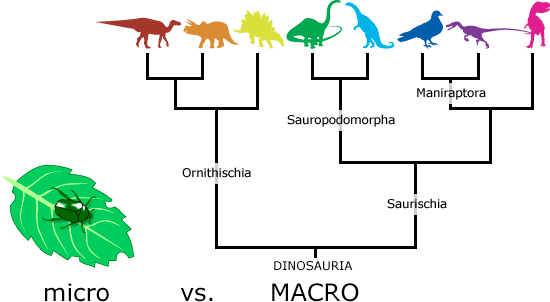
Nature Ecology & Evolution volume 7, pages 1181–1193 (2023http://evolution.berkeley.edu/evolibrary/article/evoscales_01 

Image/Imagem

Abstract

Explaining broad molecular, phenotypic and species biodiversity patterns necessitates a unifying framework spanning multiple evolutionary scales. Here we argue that although substantial effort has been made to reconcile microevolution and macroevolution, much work remains to identify the links between biological processes at play. We highlight four major questions of evolutionary biology whose solutions require conceptual bridges between micro and macroevolution. We review potential avenues for future research to establish how mechanisms at one scale (drift, mutation, migration, selection) translate to processes at the other scale (speciation, extinction, biogeographic dispersal) and vice versa. We propose ways in which current comparative methods to infer molecular evolution, phenotypic evolution and species diversification could be improved to specifically address these questions. We conclude that researchers are in a better position than ever before to build a synthesis to understand how microevolutionary dynamics unfold over millions of years.

Subscription or payment needed/Requer assinatura ou pagamento:

Nature Ecology & Evolution

Como os girassóis podem ver o sol: mero acaso, fortuita necessidade ou design inteligente?

segunda-feira, novembro 06, 2023

Multiple light signaling pathways control solar tracking in sunflowers

Christopher J. Brooks,Hagop S. Atamian,Stacey L. Harmer 

Published: October 31, 2023


Pixabay

Abstract

Sunflowers are famous for their ability to track the sun throughout the day and then reorient at night to face east the following morning. This occurs by differential growth patterns, with the east sides of stems growing more during the day and the west sides of stems growing more at night. This process, termed heliotropism, is generally believed to be a specialized form of phototropism; however, the underlying mechanism is unknown. To better understand heliotropism, we compared gene expression patterns in plants undergoing phototropism in a controlled environment and in plants initiating and maintaining heliotropic growth in the field. We found the expected transcriptome signatures of phototropin-mediated phototropism in sunflower stems bending towards monochromatic blue light. Surprisingly, the expression patterns of these phototropism-regulated genes are quite different in heliotropic plants. Most genes rapidly induced during phototropism display only minor differences in expression across solar tracking stems. However, some genes that are both rapidly induced during phototropism and are implicated in growth responses to foliar shade are rapidly induced on the west sides of stems at the onset of heliotropism, suggesting a possible role for red light photoreceptors in solar tracking. To test the involvement of different photoreceptor signaling pathways in heliotropism, we modulated the light environment of plants initiating solar tracking. We found that depletion of either red and far-red light or blue light did not hinder the initiation or maintenance of heliotropism in the field. Together, our results suggest that the transcriptional regulation of heliotropism is distinct from phototropin-mediated phototropism and likely involves inputs from multiple light signaling pathways.

FREE PDF GRATIS: PLoS Biology

Visão no cérebro – programada para a ação: mero acaso, necessidade fortuita ou design inteligente?

quinta-feira, novembro 02, 2023

Retina-derived signals control pace of neurogenesis in visual brain areas but not circuit assembly

Shachar Sherman, Irene Arnold-Ammer, Martin W. Schneider, Koichi Kawakami & Herwig Baier

Nature Communications volume 14, Article number: 6020 (2023) 

Neurons in the zebrafish brain - Biological Intelligence/Herwig Baier

Abstract

Brain development is orchestrated by both innate and experience-dependent mechanisms, but their relative contributions are difficult to disentangle. Here we asked if and how central visual areas are altered in a vertebrate brain depleted of any and all signals from retinal ganglion cells throughout development. We transcriptionally profiled neurons in pretectum, thalamus and other retinorecipient areas of larval zebrafish and searched for changes in lakritz mutants that lack all retinal connections. Although individual genes are dysregulated, the complete set of 77 neuronal types develops in apparently normal proportions, at normal locations, and along normal differentiation trajectories. Strikingly, the cell-cycle exits of proliferating progenitors in these areas are delayed, and a greater fraction of early postmitotic precursors remain uncommitted or are diverted to a pre-glial fate. Optogenetic stimulation targeting groups of neurons normally involved in processing visual information evokes behaviors indistinguishable from wildtype. In conclusion, we show that signals emitted by retinal axons influence the pace of neurogenesis in visual brain areas, but do not detectably affect the specification or wiring of downstream neurons.

FREE PDF GRATIS: Nature Communications

Darwin, nós temos um problema: mais controvérsias recentes na teoria da evolução


Dr John Welch

6 November 2023, 18:00 – 19:00  A V Hill Lecture  Bristol-Myers Squibb Lecture Theatre

Overview

Every few years, critics of evolutionary theory have argued that the field needs a radical overhaul, and this trend shows no sign of stopping. This talk will discuss some recent challenges to core parts of evolutionary theory, focussing on the most serious and substantial challenges, which have come from evolutionary biologists themselves. I will trace many of these debates back to the contested legacy of R. A. Fisher (former head of the Department of Genetics in Cambridge), arguing that the reception of his work has cast long shadows. Throughout, the issues at stake will be illustrated with recent empirical work, especially from the Mexican cave tetra (Astyanax mexicanus), and the bacterial pathogen Mycobacterium tuberculosis

Biography

Dr Welch retrained as a biologist after a music degree and a job as a programmer. Following postdoctoral work at University of Sussex, University of Edinburgh and Université de Montpellier, John joined the Department of Genetics as a lecturer in 2010.

Dr Welch’s doctoral work was in mathematical population genetics, and this is still a large part of his research, but he now combines this with empirical approaches, especially evolutionary inference from microbial genealogies, and cross-species comparative analyses.

A.V. Hill Lecture

Archibald Vivian Hill (1886-1977) FRS was an English physiologist, one of the founders of the diverse disciplines of biophysics and operations research. He shared the 1922 Nobel Prize in Physiology or Medicine for his elucidation of the production of heat and mechanical work in muscles. Hill is regarded, along with Hermann Helmholz, as one of the founders of biophysics.

The first AV Hill Lecture was delivered in 2013 by Sir Leszek Borysiewicz, Vice Chancellor of Cambridge University.

Entregas de primeira classe em células: mero acaso, fortuita necessidade ou design inteligente?

segunda-feira, outubro 09, 2023

Genetically engineered mesenchymal stem cells as a nitric oxide reservoir for acute kidney injury therapy

Haoyan Huang Meng Qian Yue Liu Shang Chen Huifang Li Zhibo Han Zhong-Chao Han Xiang-Mei Chen Qiang Zhao Zongjin Li 

Nankai University School of Medicine, China; The Key Laboratory of Bioactive Materials, Ministry of Education, Nankai University, the College of Life Sciences, China; National Key Laboratory of Kidney Diseases, Chinese PLA General Hospital, China; Jiangxi Engineering Research Center for Stem Cell, Shangrao, China; Tianjin Key Laboratory of Engineering Technologies for Cell Pharmaceutical, National Engineering Research Center of Cell Products, AmCellGene Co., Ltd, China; Beijing Engineering Laboratory of Perinatal Stem Cells, Beijing Institute of Health and Stem Cells, Health & Biotech Co, China; Tianjin Key Laboratory of Human Development and Reproductive Regulation, Tianjin Central Hospital of Gynecology Obstetrics, Nankai University Affiliated Hospital of Obstetrics and Gynecology, China

Sep 11, 2023

https://doi.org/10.7554/eLife.84820

Microscopy image of mesenchymal stem cells (blue) after administration of the drug MGP (red), which can drive the release of nitric oxygen from cells. Image credit: Huang et al. (CC BY 4.0)


Abstract

Nitric oxide (NO), as a gaseous therapeutic agent, shows great potential for the treatment of many kinds of diseases. Although various NO delivery systems have emerged, the immunogenicity and long-term toxicity of artificial carriers hinder the potential clinical translation of these gas therapeutics. Mesenchymal stem cells (MSCs), with the capacities of self-renewal, differentiation, and low immunogenicity, have been used as living carriers. However, MSCs as gaseous signaling molecule (GSM) carriers have not been reported. In this study, human MSCs were genetically modified to produce mutant β-galactosidase (β-GALH363A). Furthermore, a new NO prodrug, 6-methyl-galactose-benzyl-oxy NONOate (MGP), was designed. MGP can enter cells and selectively trigger NO release from genetically engineered MSCs (eMSCs) in the presence of β-GALH363A. Moreover, our results revealed that eMSCs can release NO when MGP is systemically administered in a mouse model of acute kidney injury (AKI), which can achieve NO release in a precise spatiotemporal manner and augment the therapeutic efficiency of MSCs. This eMSC and NO prodrug system provides a unique and tunable platform for GSM delivery and holds promise for regenerative therapy by enhancing the therapeutic efficiency of stem cells.

FREE PDF GRATIS: eLife


Organização de microcompartimentos bacterianos - mero acaso, fortuita necessidade ou design inteligente?

Dissecting the phase separation and oligomerization activities of the carboxysome positioning protein McdB

Joseph L Basalla Claudia A MakJordan A Byrne Maria GhalmiY Hoang Anthony G Vecchiarelli 

Department of Molecular, Cellular, and Developmental Biology, University of Michigan-Ann Arbor, United States; Department of Biological Chemistry, University of Michigan-Ann Arbor, United States

Sep 5, 2023

https://doi.org/10.7554/eLife.81362

Droplets of the protein McdB (green) that have phase separated out of solution and will behave like liquids by growing and fusing together. Image credit: Joe Basalla (CC BY 4.0).

Abstract

Across bacteria, protein-based organelles called bacterial microcompartments (BMCs) encapsulate key enzymes to regulate their activities. The model BMC is the carboxysome that encapsulates enzymes for CO2 fixation to increase efficiency and is found in many autotrophic bacteria, such as cyanobacteria. Despite their importance in the global carbon cycle, little is known about how carboxysomes are spatially regulated. We recently identified the two-factor system required for the maintenance of carboxysome distribution (McdAB). McdA drives the equal spacing of carboxysomes via interactions with McdB, which associates with carboxysomes. McdA is a ParA/MinD ATPase, a protein family well studied in positioning diverse cellular structures in bacteria. However, the adaptor proteins like McdB that connect these ATPases to their cargos are extremely diverse. In fact, McdB represents a completely unstudied class of proteins. Despite the diversity, many adaptor proteins undergo phase separation, but functional roles remain unclear. Here, we define the domain architecture of McdB from the model cyanobacterium Synechococcus elongatus PCC 7942, and dissect its mode of biomolecular condensate formation. We identify an N-terminal intrinsically disordered region (IDR) that modulates condensate solubility, a central coiled-coil dimerizing domain that drives condensate formation, and a C-terminal domain that trimerizes McdB dimers and provides increased valency for condensate formation. We then identify critical basic residues in the IDR, which we mutate to glutamines to solubilize condensates. Finally, we find that a condensate-defective mutant of McdB has altered association with carboxysomes and influences carboxysome enzyme content. The results have broad implications for understanding spatial organization of BMCs and the molecular grammar of protein condensates.

FREE PDF: eLife

O papel da metafísica na metafísica da ciência: entre o a priori e o naturalizado

quinta-feira, setembro 28, 2023

SEMINÁRIO PERMANENTE DE FILOSOFIA DAS CIÊNCIAS

03/10/2023, 16:00 - 18:00 (WEST - Western European Summer Time)

SALA 8.2.17 E VIDEOCONFERÊNCIA

The role of metaphysics in Metaphysics of Science: between the a priori and the naturalized

ORADOR: Vanesa Triviño (Universidad Complutense de Madrid)

ORGANIZAÇÃO: João Luís Cordovil, Silvia Di Marco

5.º SEMINÁRIO CONJUNTO “SEMINÁRIO PERMANENTE DE FILOSOFIA DAS CIÊNCIAS / REDE IBÉRICA DE FILOSOFIA DAS CIÊNCIAS (ReIFiCi)”


Abstract

The debate in Metaphysics of Science concerning the interaction that takes place between metaphysics and science has been mainly approached from the perspective of the scientific discipline of physics. In this presentation, I address this debate from a different perspective by paying attention to the biological framework and the different forms in which philosophers use metaphysics when addressing conceptual biological problems. In doing so, I argue that the type of metaphysics that interacts with science when characterizing the ontological status of the world does not seem to coincide with either of the characterizations of metaphysics given in the Metaphysics of Science debate, namely the a priori and the naturalized one. As I will consider, one of the lessons that can be obtained from the field of Metaphysics of Biology, is that a different form of metaphysics seems to be operating in the interaction between metaphysics and science, i.e., applied metaphysics.

Nota biográfica

Vanessa Triviño is an Assistant Professor at the Complutense University of Madrid. She completed her Ph.D. in 2019, focusing on inquiries related to the Metaphysics of Biology, such as the concepts of fitness, holobionts, and biological species. During her doctoral studies, she undertook research residencies at the Konrad Lorenz Institute (Klosterneuburg, Austria) and Egenis: the Centre for the Study of the Life Sciences (Exeter, England). Presently, her research centers on metametaphysical inquiries, metaphysics of science, metaphysics of biology, and feminist metaphysics. Her work delves into questions emerging from metaphysical characterization and the interplay between metaphysics and science in a broader sense, with a specific emphasis on the relationship between metaphysics and biology. Moreover, she examines theories of process metaphysics, properties, and relations to explore their potential applications and contributions to the philosophy of biology and the categorization of sexual differentiation.

Informações

O seminário será realizado presencialmente, na sala 8.2.17, mas será possível assistir também em videoconferência, via Zoom.

Link Zoom

https://videoconf-colibri.zoom.us/j/93642061648?pwd=MHhtTFFudXZpMmo1QVB0emQ3dENIdz09

Morada sala 8.2.17

Faculdade de Ciências da Universidade de Lisboa

Edifício C8, Piso 2

Campo Grande, Lisboa

Contacto

cfculcomunica@fc.ul.pt

Um close-up de nanomáquinas biológicas: mero acaso, fortuita necessidade ou design inteligente?

quarta-feira, setembro 27, 2023

Structure of the peroxisomal Pex1/Pex6 ATPase complex bound to a substrate

Maximilian Rüttermann, Michelle Koci, Pascal Lill, Ermis Dionysios Geladas, Farnusch Kaschani, Björn Udo Klink, Ralf Erdmann & Christos Gatsogiannis 

Nature Communications volume 14, Article number: 5942 (2023)


Fig. 1: Cryo-EM structure of the peroxisomal ATPase Pex1/Pex6.


Abstract

The double-ring AAA+ ATPase Pex1/Pex6 is required for peroxisomal receptor recycling and is essential for peroxisome formation. Pex1/Pex6 mutations cause severe peroxisome associated developmental disorders. Despite its pathophysiological importance, mechanistic details of the heterohexamer are not yet available. Here, we report cryoEM structures of Pex1/Pex6 from Saccharomyces cerevisiae, with an endogenous protein substrate trapped in the central pore of the catalytically active second ring (D2). Pairs of Pex1/Pex6(D2) subdomains engage the substrate via a staircase of pore-1 loops with distinct properties. The first ring (D1) is catalytically inactive but undergoes significant conformational changes resulting in alternate widening and narrowing of its pore. These events are fueled by ATP hydrolysis in the D2 ring and disengagement of a “twin-seam” Pex1/Pex6(D2) heterodimer from the staircase. Mechanical forces are propagated in a unique manner along Pex1/Pex6 interfaces that are not available in homo-oligomeric AAA-ATPases. Our structural analysis reveals the mechanisms of how Pex1 and Pex6 coordinate to achieve substrate translocation.

FREE PDF GRATIS: Nature Communications Sup. Info.

Miller-Urey, nós temos um problema sério: abordagens experimentais mais diferenciadas são necessárias.

terça-feira, setembro 12, 2023

Progress in Lipid Research

Volume 92, November 2023, 101253

The fats of the matter: Lipids in prebiotic chemistry and in origin of life studies

Author Tania C.B. Santos, Anthony H. Futerman

Department of Biomolecular Sciences, Weizmann Institute of Science, Rehovot 76100, Israel

Received 3 July 2023, Revised 30 August 2023, Accepted 30 August 2023, Available online 1 September 2023, Version of Record 12 September 2023.

https://doi.org/10.1016/j.plipres.2023.101253


The Miller-Urey experiment (now located at UCSD, San Diego) that was used to demonstrate the synthesis of biologically relevant molecules in a hypothetical primitive reducing atmosphere.

Image/Imagem 

Abstract

The unique biophysical and biochemical properties of lipids render them crucial in most models of the origin of life (OoL). Many studies have attempted to delineate the prebiotic pathways by which lipids were formed, how micelles and vesicles were generated, and how these micelles and vesicles became selectively permeable towards the chemical precursors required to initiate and support biochemistry and inheritance. Our analysis of a number of such studies highlights the extremely narrow and limited range of conditions by which an experiment is considered to have successfully modeled a role for lipids in an OoL experiment. This is in line with a recent proposal that bias is introduced into OoL studies by the extent and the kind of human intervention. It is self-evident that OoL studies can only be performed by human intervention, and we now discuss the possibility that some assumptions and simplifications inherent in such experimental approaches do not permit determination of mechanistic insight into the roles of lipids in the OoL. With these limitations in mind, we suggest that more nuanced experimental approaches than those currently pursued may be required to elucidate the generation and function of lipids, micelles and vesicles in the OoL.

Abbreviations

CoA coenzyme A DPPC1, 2-dipalmitoyl-sn-glycero-3-phosphocholine GARD graded autocatalysis replication domain Kinrate of incorporation into a micelle Kout rate of exit from a micelle OoL origin of life PA phosphatidic acid PC phosphatidylcholine PE phosphatidylethanolamine PG phosphatidylglycerol POPC1-palmitoyl-2-oleoyl-sn-glycero-3-phosphocholine PS phosphatidylserine Ps permeability coefficient R-GARD GARD with real lipids SDS sodium dodecyl sulfate SM sphingomyelin

FREE PDF: Progress in Lipid Research