Darwin, nós temos um problema: expondo os pontos fracos evolutivos do genoma humano
sexta-feira, setembro 23, 2022
RNA, o epicentro de informação genética
terça-feira, setembro 20, 2022
RNA, the Epicenter of Genetic Information
By John Mattick, Paulo Amaral
Copyright Year 2023 ISBN 9780367567781
Published September 20, 2022 by CRC Press
422 Pages 78 Color & 23 B/W Illustrations
Available on Taylor & Francis eBooks
Book Description
The origin story and emergence of molecular biology is muddled. The early triumphs in bacterial genetics and the complexity of animal and plant genomes complicate an intricate history. This book documents the many advances, as well as the prejudices and founder fallacies. It highlights the premature relegation of RNA to simply an intermediate between gene and protein, the underestimation of the amount of information required to program the development of multicellular organisms, and the dawning realization that RNA is the cornerstone of cell biology, development, brain function and probably evolution itself. Key personalities, their hubris as well as prescient predictions are richly illustrated with quotes, archival material, photographs, diagrams and references to bring the people, ideas and discoveries to life, from the conceptual cradles of molecular biology to the current revolution in the understanding of genetic information.
Key Features
- Documents the confused early history of DNA, RNA and proteins - a transformative history of molecular biology like no other.
- Integrates the influences of biochemistry and genetics on the landscape of molecular biology.
- Chronicles the important discoveries, preconceptions and misconceptions that retarded or misdirected progress.
- Highlights major pioneers and contributors to molecular biology, with a focus on RNA and noncoding DNA.
- Summarizes the mounting evidence for the central roles of non-protein-coding RNA in cell and developmental biology.
- Provides a thought-provoking retrospective and forward-looking perspective for advanced students and professional researchers.
The Open Access version of this book, available at www.taylorfrancis.com, has been made available under a Creative Commons Attribution-Non Commercial-No Derivatives 4.0 license.
Nomenklatura científica, nós temos um problema: diminuindo a Navalha de Ockham!
terça-feira, setembro 13, 2022
Cutting Down Ockham's Razor
William of Ockham famously argued that the simplest explanation is likely the best one. The idea is appealing, widely believed, and deeply misleading.
By Jim Al-Khalili
We hear all the time that the simplest explanations are usually the right ones. This truth-testing idea—known as Ockham’s razor, after the English medieval philosopher William of Ockham—has been embraced by no less authorities than Isaac Newton and Albert Einstein. Today scientists invoke Ockham’s razor on topics ranging from Covid’s origins to cosmic dark matter, while folks debating a subject on social media regularly invoke it as their final arbiter. After all, why complicate something more than you need to? Isn’t it better to shave ideas down to their essential truths?
Ockham’s razor sounds logical and definitive, which is exactly what makes it dangerous. Not only is the assumption of simplicity often false, but following it blindly can lead to serious misunderstandings, both in science and in everyday life.
A well-known historical validation of the principle of simplicity in science was in the overthrow of the geocentric model of the universe. The ancient Greeks codified a cosmology in which Earth was motionless while the sun, moon, planets, and stars all moved around it in perfect circular paths. That model held sway for nearly 2,000 years, despite becoming increasingly cumbersome as it was modified to account for the observed movements of planets like Mars, which was seen to slow down, speed up, and sometimes even double back on itself.
The Greeks attempted to account for this “retrograde” motion of Mars by assuming that it followed a secondary, smaller circular path, called an epicycle, that was bolted onto its primary circular motion around Earth. Later, improved observations of Mars and the other planets required further tinkering with the geocentric model, such as adding epicycles on top of epicycles and shifting Earth slightly away from the center of all the other bodies’ orbits.
Then, in the 16th century, Nicolaus Copernicus swept away this makeshift model and replaced it with his much simpler heliocentric picture in which the sun, not Earth, is at the center of the universe. In this view, the complicated motions of Mars as seen from Earth could be explained as a consequence of the two planets orbiting the sun at different distances and speeds. Both the Earth-centered and sun-centered models worked, in the sense that they predicted the motions of heavenly bodies reasonably well, but we now know that only one of them is correct: the Copernican model, the one without all the clumsy extras. This, we are told, is Ockham’s razor in action.
But the above account is wrong. Although Copernicus correctly replaced Earth with the sun at the center of the known cosmos, he still believed the planetary orbits to be perfect circles rather than their actual ellipses. As a result, he still needed the epicycles and other unwieldy patch-ups of the old geocentric model to get this heliocentric system to work. Although we now know that Earth does indeed go around the sun, we also know that the true dynamics of our solar system are far more convoluted than anything the ancient Greeks could have imagined. In place of epicycles, we have an ever-shifting system of ellipses whose shapes can never be calculated with perfect precision. It is Ockham’s razor in reverse.
An equally famous example in the history of science is Darwin’s theory of evolution through natural selection. It provides a unifying explanation for the tremendous variety of life we find on Earth, all of which evolved over billions of years from a single origin. Darwin’s theory is based on a few simple assumptions: 1) that individuals within a population of any species vary; 2) that these variations pass down through the generations; 3) that more individuals are born in each generation than can survive; 4) that those with characteristics better adapted to suit their environment are more likely to survive and reproduce. That’s it.
However, wrapped up in these modest assumptions are the mind-bogglingly complex fields of evolutionary biology and genetics, which are among the most challenging areas in all of science. If we are to truly apply Ockham’s razor to life on Earth, then surely the nonscientific theory of creationism—that all life was brought forth as it is today by a supernatural maker—is far simpler than Darwinian evolution.
...
Read more/Leia mais: Open Mind Magazine
Revisitando a extinção do mundo RNA
sexta-feira, agosto 26, 2022
Revisiting the Extinction of the RNA World
Anthony C. Forster*
Cite this: Biochemistry 2022, 61, 9, 749–751
Publication Date:April 7, 2022
https://doi.org/10.1021/acs.biochem.2c00121
Copyright © 2022 The Author. Published by American Chemical Society
Abstract
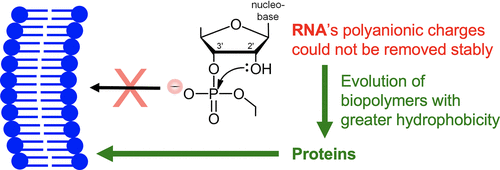
The ribozyme world is thought to have evolved the burdensome complexity of peptide and protein synthesis because the 20 amino acid side chains are catalytically superior. Instead, I propose that the Achilles heel of the RNA world that led to the extinction of riboorganisms was RNA’s polyanionic charges that could not be covalently neutralized stably by phosphotriester formation. These charges prevented development of hydrophobic cores essential for integration into membranes and many enzymatic reactions. In contrast, the phosphotriester modification of DNA is stable. So, the fact that the charge was never removed in DNA evolution gives further credence to proteins coming before DNA.
FREE PDF GRATIS: Biochemistry
Reflexões sobre a historiografia de Darwin: uma figura-chave científica sendo desconstruída.
sexta-feira, agosto 19, 2022
Reflections on Darwin Historiography
Janet Browne
Journal of the History of Biology
Getty ImagesAbstract
Much has happened in the Darwin field since the Correspondence began publishing in 1985. This overview of historiography suggests that the richness of the letters generates fresh scholarly questions and that Darwin, paradoxically, is becoming progressively deconstructed as a key figure in the history of science.
Subscription or payment needed/Requer assinatura ou pagamento:
Otodus megalodon, um extinto tubarão superpredador transoceânico
The extinct shark Otodus megalodon was a transoceanic superpredator: Inferences from 3D modeling
Jack A. Cooper, John R. Hutchinson, David C. Bernvi, Geremy Cliff, Rory P. Wilson, Matt L. Dicken, Jan Menzel, Stephen Wroe, Jeanette Pirlo, and Catalina Pimiento Authors Info & Affiliations
SCIENCE ADVANCES 17 Aug 2022 Vol 8, Issue 33 DOI: 10.1126/sciadv.abm9424
Abstract
Although shark teeth are abundant in the fossil record, their bodies are rarely preserved. Thus, our understanding of the anatomy of the extinct Otodus megalodon remains rudimentary. We used an exceptionally well-preserved fossil to create the first three-dimensional model of the body of this giant shark and used it to infer its movement and feeding ecology. We estimate that an adult O. megalodon could cruise at faster absolute speeds than any shark species today and fully consume prey the size of modern apex predators. A dietary preference for large prey potentially enabled O. megalodon to minimize competition and provided a constant source of energy to fuel prolonged migrations without further feeding. Together, our results suggest that O. megalodon played an important ecological role as a transoceanic superpredator. Hence, its extinction likely had large impacts on global nutrient transfer and trophic food webs.
FREE PDF GRATIS: Science Advances Sup. Info.
Darwin, nós temos um problema: uma breve história das histórias da carochinha em ciência evolucionária - explanação de narrativa implausível
sábado, agosto 13, 2022
A Brief (Hi)Story of Just-So Stories in Evolutionary Science
Michal Hubálek
First Published August 6, 2020
https://doi.org/10.1177/0048393120944223
Volume: 51 issue: 5, page(s): 447-468
Article first published online: August 6, 2020; Issue published: September 1, 2021
Michal Hubálek 1
1 University of Hradec Králové, Hradec Králové, Czech Republic
Corresponding Author:
Michal Hubálek, Department of Philosophy and Social Sciences, University of Hradec Králové, Hradec Králové, EU 500 03, Czech Republic. Email: hubalek.michal.42@gmail.com
Abstract
In this essay, I examine the usage of the term “just-so story.” I attempt to show that just-so storytelling can be seen as an epistemic concept that, in various ways, tackles the epistemological and methodological problems relating to evolutionary explanations qua historical/narrative explanations. I identify two main, yet mutually exclusive, strategies of employing the concept of a just-so story: a negative strategy and a positive strategy. Subsequently, I argue that these strategies do not satisfactorily capture the core of the “original” meaning advanced by Stephen Jay Gould and Richard Lewontin at the end of the 1970s. I revisit the foundation(s) of their anti-adaptationist critique in order to reframe it as a critique of distinctive methodological manners and epistemic maxims related to historical inquiry. Last but not least, I suggest that contemporary evolutionary thinkers have two conceptually different options: they can either adhere to the “original” meaning of the term “just-so story” or accept that “just-so story” is a term equivalent to “implausible narrative explanation.”
Keywords just-so story, narrative explanation, adaptationism, Stephen Jay Gould, Richard Lewontin
Subscription or payment needed/Requer assinatura ou pagamento: Philosophy of the Social Sciences
Darwin, nós temos um problema - o neodarwinismo é um paradigma falido!
sábado, agosto 06, 2022
The fight for the future of biology
The broken paradigm of Neo-Darwinism
4th August 2022
Denis Noble | World-renowned physiologist and Emeritus Professor of Cardiovascular Physiology at Oxford University. He is the author of Dance to the Tune of Life: Biological Relativity (CUP 2016).
The Neo-Darwinist paradigm maintains that natural selection is the sole driving force in evolution. This paradigm is not only wrong, but untrue to Darwin’s theory of evolution which made room for Lamarck’s suggestion that acquired characteristics can also be inherited. The side-lining any research into Lamarckian evolution has stifled the fruitful work of generations of researchers, limiting our understanding of how inheritance really works, argues Denis Noble.
The Neo-Darwinist paradigm of evolutionary biology is almost defined by its view of inheritance. That view is that acquired characteristics cannot be inherited, and that the organism itself has no active role in the evolution of the species. One of its founders, August Weismann, created the break with the ideas of Charles Darwin in 1883, just a year following Darwin’s death in 1882. He did so by inventing the Weismann Barrier, which he claimed protects the germ-line, the future eggs and sperm, from any influences of use-disuse features acquired by the organism during its lifetime. He was therefore going against the Lamarckian idea of inheritance of acquired characteristics that Darwin had accepted and later expanded upon in his writings on heredity. There was no experimental evidence for Weismann’s idea. He even wrote that it was a “necessary” idea, whether or not any experiments supported it.
...
Read more here: IAI News
Vendo a célula em uma dimensão totalmente nova: mero acaso, fortuita necessidade ou design inteligente?
sexta-feira, julho 29, 2022
Journal of Molecular Biology
Volume 434, Issue 2, 30 January 2022, 167351
Research Article
Building Structural Models of a Whole Mycoplasma Cell
Martina Maritan 1†Ludovic Autin 1†Jonathan Karr 2 Markus W.Covert 3 Arthur J.Olson 1 David S.Goodsell14
1 Department of Integrative Structural and Computational Biology, The Scripps Research Institute, La Jolla, CA, 92037 USA
2 Department of Genetics and Genomic Sciences, Icahn School of Medicine at Mount Sinai, New York, NY 10029, USA
3 Department of Bioengineering, Stanford University, Stanford, CA 94305, USA
4 RCSB Protein Data Bank and Institute for Quantitative Biomedicine, Rutgers, the State University of New Jersey, Piscataway, NJ 08854, USA
Received 5 August 2021, Revised 4 November 2021, Accepted 5 November 2021, Available online 10 November 2021, Version of Record 22 November 2021.
Edited by Amy Keating
https://doi.org/10.1016/j.jmb.2021.167351
Highlights
• 3D whole cell modeling requires new bioinformatics and computational methods.
• Information for generating 3D cell models is gathered and curated with Mesoscope.
• A multi-step workflow generates structural models of an entire proteome.
• Entire bacterial cells are interactively modeled and visualized with CellPACKgpu.
• This work demonstrates the feasibility of building 3D models of an entire cell.
Abstract
Building structural models of entire cells has been a long-standing cross-discipline challenge for the research community, as it requires an unprecedented level of integration between multiple sources of biological data and enhanced methods for computational modeling and visualization. Here, we present the first 3D structural models of an entire Mycoplasma genitalium (MG) cell, built using the CellPACK suite of computational modeling tools. Our model recapitulates the data described in recent whole-cell system biology simulations and provides a structural representation for all MG proteins, DNA and RNA molecules, obtained by combining experimental and homology-modeled structures and lattice-based models of the genome. We establish a framework for gathering, curating and evaluating these structures, exposing current weaknesses of modeling methods and the boundaries of MG structural knowledge, and visualization methods to explore functional characteristics of the genome and proteome. We compare two approaches for data gathering, a manually-curated workflow and an automated workflow that uses homologous structures, both of which are appropriate for the analysis of mesoscale properties such as crowding and volume occupancy. Analysis of model quality provides estimates of the regularization that will be required when these models are used as starting points for atomic molecular dynamics simulations.
FREE PDF GRATIS: Journal of Molecular Biology
Uma nova teoria da formação da Terra
Stochastic accretion of the Earth
Paolo A. Sossi, Ingo L. Stotz, Seth A. Jacobson, Alessandro Morbidelli & Hugh St. C. O’Neill
Nature Astronomy (2022)
Abstract
Chondritic meteorites are thought to be representative of the material that formed the Earth. However, the Earth is depleted in volatile elements in a manner unlike that observed in any chondrite, and yet these elements retain chondritic isotope ratios. Here we use N-body simulations to show that the Earth did not form only from chondrites, but by stochastic accretion of many precursor bodies whose variable compositions reflect the temperatures at which they formed. Earth’s composition is reproduced when the initial temperatures of planetesimal- to embryo-sized bodies are set by disk accretion rates of (1.08 ± 0.17) × 10−7 solar masses per year, although they may be perturbed by 26Al heating on bodies formed at different times. Our model implies that a heliocentric gradient in composition was present in the protoplanetary disk and that planetesimals formed rapidly within ~1 Myr, consistent with radiometric volatile depletion ages of the Earth.
Subscription or payment needed/Requer assinatura ou pagamento: Nature Astronomy
Preprint available/Pre-impressão disponível: arXiv
A evolução química reimaginada
quarta-feira, julho 27, 2022
Chemical Evolution Reimagined
WORKING PAPER
Moran Frenkel Pinter, Hebrew University of Jerusalem ,Kavita Matange, Georgia Institute of Technology, Vahab Rajaei, Georgia Institute of Technology, John T Costner, Georgia Institute of Technology, Adelaide Robertson, Georgia Institute of Technology, Jennifer Seoyoung Kim, Georgia Institute of Technology, Anton S Petrov, Georgia Institute of Technology, Jessica C. Bowman, Georgia Institute of Technology, Loren Dean, Williams Georgia Institute of Technology
Image/Imagem: Chemistry World
Abstract
Some of the most interesting open questions about the origins of life and molecular sciences center on chemical evolution and the spontaneous generation of new complex and functional chemical species. The spectacular polymers that underlay biology demonstrate an untapped, by modern science, creative potential. We hypothesized that prebiotic chemical evolutionary processes leading to biopolymers were not idiosyncratic one-off events. We have developed an experimental platform that accomplishes chemical evolution in the laboratory. In this paper we describe this platform and report empirical outcomes, some of which were not foreseen. We have constructed experimental platform to study evolution of chemical systems that: (i) undergo continuous recursive change with transitions to new chemical spaces while not converging, (ii) demonstrate stringent chemical selection, during which combinatorial explosion is avoided, (iii) maintain synchronicity of molecular sub-populations, and (iv) harvest environmental energy that is invested in chemical reactions. We have established general guidelines for conducting chemical evolution. Our results suggest that chemical evolution can be adapted to produce a broad array of molecules with novel structures and functions.
FREE PDF GRATIS: ChemRxiv Sup. Info.
A interpretação de embriões fósseis requer avaliação razoável da idade de desenvolvimento.
Interpretation of fossil embryos requires reasonable assessment of developmental age
Published online by Cambridge University Press: 20 July 2022
D. Charles Deeming and Martin Kundrát
Abstract
Dinosaur embryos cause a lot of excitement in the scientific literature and are often widely reported because of the general public's interest in dinosaur biology. Well-preserved, articulated oviraptorosaur embryos in eggs are usually interpreted as representing a stage of development close to hatching because of their large size and good level of skeletal ossification. Based on this evidence, a recent report suggested that the position of the one embryo's head was reminiscent of an avian-like hatching position. Here we explore how the developmental stage of well-preserved oviraptorosaur embryos can be estimated, rather than assumed. This will help in our understanding of their developmental biology and its evolutionary consequences. Using quantitative methods and comparison with modern crocodilian embryos, we show that all articulated oviraptorosaur embryos are small relative to the egg and most likely at a stage of development equivalent to around 50%–60% of the developmental period, that is, not even close to hatching. This conclusion is supported by the fact that many elements of the crocodilian skeleton are well ossified many weeks before hatching and the position of oviraptorosaur embryos’ heads was also comparable to a crocodilian embryo many days before hatching. Misunderstandings about the stage of the developmental biology of these well-preserved oviraptorosaur embryos hampers our understanding of the true nature of their reproductive biology. We urge a more conservative approach to their interpretation. This is important, because misunderstandings in the minds of the public about dinosaur biology are hard to counter once poorly evidenced ideas have been reported around the world.
FREE PDF GRATIS: Palaeobiology
Se o design na natureza é mera ilusão, por que procurar design na natureza?
terça-feira, julho 26, 2022
A DNA origami rotary ratchet motor
Anna-Katharina Pumm, Wouter Engelen, Enzo Kopperger, Jonas Isensee, Matthias Vogt, Viktorija Kozina, Massimo Kube, Maximilian N. Honemann, Eva Bertosin, Martin Langecker, Ramin Golestanian, Friedrich C. Simmel & Hendrik Dietz
Nature volume 607, pages492–498 (2022)
Fig. 1: Motor design and experimental setup.
Abstract
To impart directionality to the motions of a molecular mechanism, one must overcome the random thermal forces that are ubiquitous on such small scales and in liquid solution at ambient temperature. In equilibrium without energy supply, directional motion cannot be sustained without violating the laws of thermodynamics. Under conditions away from thermodynamic equilibrium, directional motion may be achieved within the framework of Brownian ratchets, which are diffusive mechanisms that have broken inversion symmetry1,2,3,4,5. Ratcheting is thought to underpin the function of many natural biological motors, such as the F1F0-ATPase6,7,8, and it has been demonstrated experimentally in synthetic microscale systems (for example, to our knowledge, first in ref. 3) and also in artificial molecular motors created by organic chemical synthesis9,10,11,12. DNA nanotechnology13 has yielded a variety of nanoscale mechanisms, including pivots, hinges, crank sliders and rotary systems14,15,16,17, which can adopt different configurations, for example, triggered by strand-displacement reactions18,19 or by changing environmental parameters such as pH, ionic strength, temperature, external fields and by coupling their motions to those of natural motor proteins20,21,22,23,24,25,26. This previous work and considering low-Reynolds-number dynamics and inherent stochasticity27,28 led us to develop a nanoscale rotary motor built from DNA origami that is driven by ratcheting and whose mechanical capabilities approach those of biological motors such as F1F0-ATPase.
FREE PDF GRATIS: Nature Sup. Info.
O desenvolvimento embrionário inicial diverso de vertebrados e implicações sobre sua ancestralidade
sábado, julho 23, 2022
The diverse early embryonic development of vertebrates and implications regarding their ancestry
David Swift
Image/Imagem: Nature Reviews Molecular Cell Biology
Abstract
It is well known that the embryonic development of vertebrates from different classes (e.g., fish, reptiles, mammals) pass through a “phylotypic stage” when they look similar, and this apparent homology is widely seen as evidence of their common ancestry. However, despite their morphological similarities, and contrary to evolutionary expectations, the phylotypic stages of different vertebrate classes arise in radically diverse ways. This diversity clearly counters the superficial appearance of homology of the phylotypic stage, and the plain inference is that vertebrates have not evolved from a common vertebrate ancestor. The diversity extends through all stages of early development—including cleavage and formation of the blastula, gastrulation, neurulation, and formation of the gut and extraembryonic membranes. This paper focuses on gastrulation, during which the germ layers originate and the vertebrate body-plan begins to form. Despite its key role in embryonic development, gastrulation occurs in fundamentally different ways in different classes of vertebrates. The inference against common ancestry becomes progressively stronger as more is discovered about the genetic and molecular mechanisms that implement development. It is increasingly evident that these are of such complexity that it is unrealistic to think that undirected variations (random mutations) could produce constructive changes to development, such as those required to account for a diversification of development from that of a common ancestor, especially while retaining a similar phylotypic stage.
FREE PDF GRATIS: BIO-Complexity
Edição especial do PNAS sobre os 200 anos do nascimento de Gregor Mendel e suas descobertas científicas
quarta-feira, julho 20, 2022
Cronometragem e tomada de decisão em células vivas: mero acaso, fortuita necessidade ou design inteligente?
terça-feira, julho 19, 2022
Time-keeping and decision-making in living cells: Part I
John J. Tyson, Attila Csikasz-Nagy, Didier Gonze, Jae Kyoung Kim, Silvia Santos and Jana Wolf
Published:15 April 2022 https://doi.org/10.1098/rsfs.2022.0011
Abstract
To survive and reproduce, a cell must process information from its environment and its own internal state and respond accordingly, in terms of metabolic activity, gene expression, movement, growth, division and differentiation. These signal–response decisions are made by complex networks of interacting genes and proteins, which function as biochemical switches and clocks, and other recognizable information-processing circuitry. This theme issue of Interface Focus (in two parts) brings together articles on time-keeping and decision-making in living cells—work that uses precise mathematical modelling of underlying molecular regulatory networks to understand important features of cell physiology. Part I focuses on time-keeping: mechanisms and dynamics of biological oscillators and modes of synchronization and entrainment of oscillators, with special attention to circadian clocks.
FREE PDF GRATIS: Interface Focus
Darwin, nós temos um problema: o DNA lixo é funcional e faz uma grande diferença.
segunda-feira, julho 18, 2022
Not functional yet a difference maker: junk DNA as a case study
Joyce C. Havstad & Alexander F. Palazzo
Biology & Philosophy volume 37, Article number: 29 (2022)
Abstract
It is often thought that non-junk or coding DNA is more significant than other cellular elements, including so-called junk DNA. This is for two main reasons: (1) because coding DNA is often targeted by historical or current selection, it is considered functionally special and (2) because its mode of action is uniquely specific amongst the other actual difference makers in the cell, it is considered causally special. Here, we challenge both these presumptions. With respect to function, we argue that there is previously unappreciated reason to think that junk DNA is significant, since it can alter the cellular environment, and those alterations can influence how organism-level selection operates. With respect to causality, we argue that there is again reason to think that junk DNA is significant, since it too (like coding DNA) is remarkably causally specific (in Waters’, in J Philos 104:551–579, 2007 sense). As a result, something is missing from the received view of significance in molecular biology—a view which emphasizes specificity and neglects something we term ‘reach’. With the special case of junk DNA in mind, we explore how to model and understand the causal specificity, reach, and corresponding efficacy of difference makers in biology. The account contains implications for how evolution shapes the genome, as well as advances our understanding of multi-level selection.
FREE PDF GRATIS: Biology & Philosophy
Darwin, nós temos um problema: a conectividade de áreas de linguagem são únicas no cérebro humano
sexta-feira, julho 15, 2022
Comparing human and chimpanzee temporal lobe neuroanatomy reveals modifications to human language hubs beyond the frontotemporal arcuate fasciculus
Joanna Sierpowska, Katherine L. Bryant, Nikki Janssen, +4 , Guilherme Blazquez Freches, Manon Römkens, Margot Mangnus, Rogier B. Mars, and Vitoria Piai
Edited by Marcus Raichle, Washington University in St. Louis, St. Louis, MO; received October 7, 2021; accepted May 11, 2022
July 5, 2022
119 (28) e2118295119
https://doi.org/10.1073/pnas.2118295119
Significance
Communication through language is a great achievement of evolution. In humans, the arcuate fasciculus, white matter that extended dramatically during evolution, is known to subserve language. We investigated whether connections through critical language centers in the temporal lobe are uniquely human. We show that connectivity in the posterior temporal lobe via the arcuate fasciculus expanded bilaterally to frontal and parietal cortices in humans compared with chimpanzees. Concomitantly, the ventral tracts connect more strongly to posterior temporal regions in the chimpanzees than in humans. In the anterior temporal lobe, connections shared between both species and uniquely human expansions are present. Changes to human language streams extend beyond the arcuate fasciculus, including a suite of expansions to connectivity within the temporal lobes.
Abstract
The biological foundation for the language-ready brain in the human lineage remains a debated subject. In humans, the arcuate fasciculus (AF) white matter and the posterior portions of the middle temporal gyrus are crucial for language. Compared with other primates, the human AF has been shown to dramatically extend into the posterior temporal lobe, which forms the basis of a number of models of the structural connectivity basis of language. Recent advances in both language research and comparative neuroimaging invite a reassessment of the anatomical differences in language streams between humans and our closest relatives. Here, we show that posterior temporal connectivity via the AF in humans compared with chimpanzees is expanded in terms of its connectivity not just to the ventral frontal cortex but also to the parietal cortex. At the same time, posterior temporal regions connect more strongly to the ventral white matter in chimpanzees as opposed to humans. This pattern is present in both brain hemispheres. Additionally, we show that the anterior temporal lobe harbors a combination of connections present in both species through the inferior fronto-occipital fascicle and human-unique expansions through the uncinate and middle and inferior longitudinal fascicles. These findings elucidate structural changes that are unique to humans and may underlie the anatomical foundations for full-fledged language capacity.
Subscription or payment needed/Requer assinatura ou pagamento: PNAS
+++++
Professores, pesquisadores e alunos de universidades públicas e privadas com acesso ao portal Periódicos/Capes podem ler gratuitamente este artgo do PNAS e mais 48.000 publicações científicas.
Darwin, nós temos um problema: novo método de datação destrói nossa compreensão da evolução humana!
quinta-feira, julho 14, 2022
A crise de irreprodutibilidade da ciência moderna - Causas, consequências e caminho para reforma
quarta-feira, julho 13, 2022
A crise de irreprodutibilidade da ciência moderna - Causas, consequências e caminho para reforma - Relatório (em inglês) da National Association of Scholars.
FREE PDF GRATIS: NAS
Perspectiva evolutiva sobre a origem e diversificação da vida celular e a virosfera
terça-feira, julho 12, 2022
Evolving Perspective on the Origin and Diversification of Cellular Life and the Virosphere
Anja Spang, Tara A Mahendrarajah, Pierre Offre, Courtney W Stairs Author Notes
Genome Biology and Evolution, Volume 14, Issue 6, June 2022, evac034,
https://doi.org/10.1093/gbe/evac034
Published: 26 February 2022 Article history Accepted: 18 February 2022 Published: 26 February 2022 Corrected and typeset: 06 June 2022
Abstract
The tree of life (TOL) is a powerful framework to depict the evolutionary history of cellular organisms through time, from our microbial origins to the diversification of multicellular eukaryotes that shape the visible biosphere today. During the past decades, our perception of the TOL has fundamentally changed, in part, due to profound methodological advances, which allowed a more objective approach to studying organismal and viral diversity and led to the discovery of major new branches in the TOL as well as viral lineages. Phylogenetic and comparative genomics analyses of these data have, among others, revolutionized our understanding of the deep roots and diversity of microbial life, the origin of the eukaryotic cell, eukaryotic diversity, as well as the origin, and diversification of viruses. In this review, we provide an overview of some of the recent discoveries on the evolutionary history of cellular organisms and their viruses and discuss a variety of complementary techniques that we consider crucial for making further progress in our understanding of the TOL and its interconnection with the virosphere.
Key words tree of life, viruses, archaea, bacteria and eukaryotes, eukaryogenesis, diversity and evolution, methodological progress
Significance
Our review provides a timely overview of how recent methodological progress has allowed an updated view on the tree of life and its connection to the virosphere. It covers topics ranging from last universal common ancestor to last eukaryotic common ancestor and the extant diversity of prokaryotic and eukaryotic life as well as viruses. Furthermore, we summarize current developments in the field that can help to make further progress in our understanding of deep evolution in the coming years.
FREE PDF GRATIS: Genome Biology Evolution