A teoria evolucionária darwinista pode ser levada a sério???

quarta-feira, junho 01, 2016

REDISCOVERING LIFE

Can Darwinian Evolutionary Theory Be Taken Seriously?

Stephen L. Talbott

This article is part of “RediscoveringLife.org”, a news portal for the Biology Worthy of LifeProject. Copyright 2016 The Nature Institute. All rights reserved.
By placing your cursor on scientific terms such as “development” (try it here), you may find them to be clickable links into a separate glossary window (or tab, if your browser is set that way). You can in any case open the glossary for browsing by clicking here.


Posted: May 17, 2016 (Article 30)

This article is the initial offering in a projected trilogy. The other two articles are tentatively entitled, “Evolution as a Story of Extended Development” and “The Intentional Organism”. The three pieces are intimately intertwined and mutually supportive. None of the three is fully intended to stand by itself, but, for the time being, this one must do just that.


Evolutionary biologists today find themselves in a troubled relationship with the American public. Their great source of discomfort and wonder lies in the fact that the theory of evolution is “still under siege”1 by a substantial and sometimes aggressively disbelieving population — this despite being “an established and accepted scientific theory for 150 years”.2 “What are we doing wrong?” asks Jason Wiles, a biologist and educator at Syracuse and McGill Universities. His answer: “We do not know”.3 And, in light of the vast institutional support undergirding evolutionary science, another educator wonders why “those exposed to evolution education do not generally demonstrate mastery of the concept”.4

The usual claim is that at least half of Americans doubt the prevailing theory, if not the very fact, of evolution. Or, at least, they recoil from the theory’s standard presentation, which tells them that the entire sweep of evolution, from microbes to man, has occurred through natural processes.5 “Natural”, in this context, means something like “purely material, purposeless, and inherently meaningless”.

Of course, rejecting the natural looks rather like bad karma. But then, embracing strictly material meaninglessness is not an obvious key to enlightenment. Do the meanings and values we derive through our experience in the world really belong to the world, or are biologists merely inventing things when they deem the truth desirable and their own work worthwhile? Are mentality and purpose alien to nature? — and if not, can they be alien to fundamental evolutionary processes?

Actually, no one doubts that human culture, with all its purposes and meanings, now plays a large role, both in our own evolutionary development and in the extinction, preservation, and modification of other species. Can we believe that our cultural ideas andintentions, which so effectively re-shape the material world, arrive on the scene only through ruptures in the natural fabric of the universe?

But the problem of meaning and purpose runs through all pre-human evolution as well. To see this, we need only observe the remarkable display of wisdom and carefully coordinated, apparently goal-directed activity so evident in dividing cells, developingembryos, mating animals, and organisms seeking food. We can hardly dismiss the evolutionary relevance of these adroit, adaptive, and seemingly intentional performances.

Perhaps we should pause and take a fresh look at things.

I would like to suggest that if half of all American citizens have become (as certain arch-defenders of biological orthodoxy like to put it) “science deniers”, then something important is afoot, and it does not look good for science. At the very least — if we assume the denial to be as unreservedly stupid as it is said to be — it would mean that science has massively and catastrophically failed our educational system. Or, if it’s not that stupid, perhaps half the population simply refuses, with more or less understanding, to tune into certain tendencies and philosophical commitments that have grossly distorted the interpretive framework governing most biological science today.6

The organism as a pretender

Some things are too obvious to deny, and not many biologists will flatly dispute the intelligently purposive, or teleological, character of organisms. “It would make no sense to talk of the purposiveness or adaptation of stars, mountains, or the laws of physics”, wrote Theodosius Dobzhansky, a geneticist and leading architect of twentieth-century evolutionary theory. But “adaptedness of living beings is too obvious to be overlooked ... Living beings have an internal, or natural, teleology”.7

Philosopher of biology Robert Arp puts it this way:

Thinkers cannot seem to get around [evolutionary biologist Robert] Trivers’ claim8 that “even the humblest creature, say, a virus, appears organized to do something; it acts as if it is trying to achieve some purpose” ... Darwin’s biology does not deny — rather, it reaffirms — the immanent teleology displayed in the striving of each living being to fulfill its specific ends ... Reproduction, growth, feeding, healing, courtship, parental care for the young — these and many other activities of organisms are goal-directed”.9

Here, however, is where a strange ambiguity begins. For even if what Arp points out seems obvious, he cannot quite bring himself to accept it at face value. So he hedges those remarks with a crucial qualification: “with respect to organisms, it is useful to think as ifthese entities have traits and processes that function in goal-directed ways” (his emphasis). In other words, the organism’s purposive behavior is not quite what it seems.

This “as if” has long been a cliché of evolutionary biology. In 1909, the prominent German evolutionary theorist, August Weismann, said that “the principle of [natural] selection solved the riddle, how it is possible to produce adaptedness without the intervention of a goal-determining force”.10

The idea was simple: there is always variation among organisms, and the ceaseless culling of the less fit among them by natural selection leaves the field to those organisms bearing the most useful variations. These are the organisms most fit for survival and reproduction — best adapted for functioning successfully in their prevailing environments. They therefore appear to be goal-directed beings, whether the goal is survival or any lesser goal serving the purpose of survival. But Weismann wants to assure us that there is noactual goal-seeking going on — or, as he puts it, no “goal-determining force” at work.

Julian Huxley, who coined the phrase “Modern Synthesis” to describe the now canonical, twentieth-century formulation of what is also called “neo-Darwinism”, wrote in 1942:

It was one of the great merits of Darwin himself to show that the purposiveness of organic structure and function was apparent only. The teleology of adaptationis a pseudo-teleology, capable of being accounted for on good mechanistic principles, without the intervention of purpose, conscious or subconscious, either on the part of the organism or of any outside power”.11

Here, again, we are said to be saved from the “intervention” of an alien force, as if real purpose and intelligence would be an offense against the natural world.

And, several decades later, the author who gave us the “selfish gene” warned us how hard it can be to escape illusion: “So overwhelming is the appearance of purposeful design that, even in this Darwinian era when we know ‘better’, we still find it difficult, indeed boringly pedantic, to refrain from teleological language when discussing adaptation”. And yet, Richard Dawkins is ever ready to remind us, “the theory of natural selection provides a mechanistic, causal account of how living things came to look as if they had been designed for a purpose”12 (emphasis added).

Dawkins’ formulation has the virtue of making explicit the fact that the organism of the long-running cliché is a designed artifact, or machine. The purposes posing the original problem — purposes that seemed to arise from a live sensing of the requirements of the present moment and a directional striving — have been quietly assumed away. They now become the functions of a machine-organism. So the question about the organism’s purposeful activity has disappeared in favor of this: “Was the design of the artifactual organism purposeful or not?”

Of course, Dawkins’ own strong predilection runs toward purposeless design by natural selection, a “blind watchmaker”13 who gives us an apparent purpose that — no need to worry! — isn’t quite the real thing. On the other hand, many of the opponents Dawkins commonly has in mind prefer an intelligent designer. What seems to have fallen out of the argument on both sides is the organism itself, which has vanished into the automatisms of engineered machinery. Its living powers have been transferred to a mysterious designer, blind or otherwise, who, having messed around with everyone’s ancestors, remains conveniently obscure for current scientific investigation.

Pursuing an illusion is hard to do

A rather odd urgency sounds through all this earnest insistence that, while organisms certainly look as if they possessed intelligent agency, we should not be so foolish as to be compelled by the evidence of our own eyes. And the claim is curiously vague. How, after all, might we distinguish between an organism capable of expressing wise intention, and an organism capable of conjuring an overwhelming illusion of wise intention? Is there, in fact, evidence that can properly override the judgment of our own eyes?

Suppose, having watched a powerful drama in which the players improvise on Shakespeare’s Hamlet, we were told that its meaningfulness — all the evident thought and intention of the players, all the unpredictable, yet coherent and directed storytelling activity — was somehow an illusion. What could we possibly make of this? Isn’t an appearance of meaningful dialogue already meaningful dialogue — and wouldn’t it remain so even if we subsequently found that it came to us, not as we thought, but in a ghostly vision? Pointing to a ghost that speaks meaningful words to us does nothing to banish the problem of meaning.

The same would be true if a cleverly programmed, artificially intelligent robot spoke those words. We would recognize a real — not a pseudo — intelligence somewhere behind the production of the meaningful speech. The question would not be whether we were seeing evidence of real intelligence, but where was its live origin.

It is easy to believe that the ubiquitous and casually spoken aphorisms about as ifteleology have never clearly been thought through. They may serve mainly as a convenient smokescreen for covering theoretical confusion — or, perhaps, a means of self-reassurance in the face of a powerful awareness of one’s own interior life, an awareness virtually impossible to shake off. “Yes, we are sometimes moved by profound meaning, and we pursue our own intentions; but that’s okay because none of this is quite what it seems to be”.

Or, which is much the same thing: “Darwin assumed only variation and natural selection, resulting in adaptation. The ‘results’ are the same as if they had been ‘intended’”.14 We might want to ask, “If the results really are the same as if they were intended, what makes them not really intended?” But perhaps it’s not worth the bother.

The thing to hold onto in all this is natural selection. If there seems to be real purpose in organisms, so we’re told, then natural selection explains it, or explains it away, in non-purposive terms. If there is only an illusion of purpose, natural selection is the responsible agent behind the illusion. Just as we trace the machine’s intelligence and intentions to a human designer, we must trace the organism’s intelligence and intentions, such as they may be, to natural selection, the blind, mindless, unintelligent, yet wondrously effective designer whose existence Darwin exposed.

But do we have any possible grounds for taking natural selection seriously as a designer of organisms and explainer of their intelligence? Before answering that question, we need to clarify some terminology by distinguishing between machines and organisms. The issues are fateful; they make or break the entire theoretical structure underlying modern biology.

Of machines, organisms, and agency

When we build a machine, we manipulate materials of the world so as to configure a set of causal physical relations adequate to our purposes. Following this configuration, the machine’s performance is shaped by those causal relations, yielding a result that is in some regards predictable so long as outside factors do not interfere. Everything “rolls along” within the preestablished physical constraints. Engineers and philosophers speak of the “initial conditions” of the system — its original, designed arrangement — which then constrains the subsequent performance.

Organisms are not machines.15 They are not endowed with a set of initial conditions, after which they carry forward the mechanistic implications of those conditions. The organism is, moment by moment, establishing new “initial” conditions. It is as if a machine were being redesigned at every moment — or would be like that if the organism were machine-like. In reality, the organism’s life is a continual “self-redesigning” — or, better, a self-expressing, or self-transforming. Its parts are not assembled once for all; they aregrown on the spot during development, so that the functional unity of the organism — the way its parts play together, and even what the parts are — obviously must be changing all along the way. If the organism were machine-like, it would be a different, newly constituted and redesigned machine each time you looked at it.

So the organism possesses, or is, a power of origination. It constantly brings about something new — something never wholly implied or determined by the physical relations of a moment ago.16 We could also think of it as a power of self-realization. The “design work” accounting for the organism is an activity inseparable from the organism’s own life. It is an expression of that life rather than a cause of it.

Machines and organisms have this in common: whatever is responsible for orchestrating causal arrangements — initially, in the case of machines, or continually, in the case of organisms — cannot itself be explained by those arrangements. This single fact calls into question the entire habit within biology of trying to explain the present purely as the consequence of material forces playing out of the past.

Biologists speak incessantly of mechanisms and of machine-like or programmed activity in organisms. But this is empty rhetoric. No one has ever pointed to a computer-like program in DNA, or in a cell, or in any larger structure. Nor has anyone shown us any physical machinery for executing such program instructions. Nor, for that matter, has anyone ever explained what constrains diffusible molecules in a watery medium to carry out intricate and elaborately sequenced operations, such as DNA replication or RNA splicing.

So, then, how do the organism’s self-designing, or self-expressing, intentions compare to our own purposive, engineering activity in designing machines? There is a crucial difference between the two. We do not cause the parts of a machine to grow together; we put them together. Our designing activity impinges on the machine “from the outside”. This is best understood by comparison with organisms.

As we have seen, the life of the organism is itself the designing power. Its agency is immanent in its own being, and is somehow expressed at the very roots of material causation. It brings forth this or that kind of growth with no need for the artifice of an alien hand arbitrarily intervening to arrange parts and causal relations this way or that. The choreographing is brought about, it would appear, from that same depth of reality where the causal forces themselves arise, not from “outside”. However we conceive this “inner” place, it is, at least for now, inaccessible to our own engineering prowess.

At the same time, we ourselves possess varieties of conscious activity that other organisms do not. When I refer to the organism’s intelligent agency, or its purposiveness, or its directed coordination of means to serve particular ends, I do not imply anything equivalent to our own conscious purposing or planning. But neither do I suggest somethinginferior to our particular sort of wisdom and power of action. If anything, we must consider organic life — for example, the life of our cells — to be an expression of a higher sort of intelligence and intention than we ourselves can yet imagine consciously achieving in the technological realm.

Rather than over-defining terms and transgressing the boundaries of my own understanding, I am inclined to leave the matter there. I will tend to use words such as “intelligence”, “purpose”, “intention”, and “agency” in the way we commonly use them, with the understanding that the reader will keep in mind the above considerations. Given the scientific culture’s reflexive recoil from the psychic and voluntary in all its manifestations, I prefer to err on the side of anthropomorphism rather than to encourage the usual dismissal of interior reality.

It needs adding, finally, that our recognition of intelligent and intentional expressions does not require us to understand everything about their source. We would have no difficulty distinguishing the significance of letters on a page from that of pebbles distributed on a sandy shore, even if we knew nothing about origins in either case. We can declare a functioning machine to be a designed object, whether or not we have any clue about who designed it. And if we find live, intelligent performances by organisms, we don’t have to know how, or from where, the intelligence gains its foothold before we accept the testimony of our eyes and understanding.


+++++

Stephen L. Talbott
The Nature Institute; Ghent, New York

After many years working in the engineering organizations of computer manufacturers, Talbott joined The Nature Institute as Senior Researcher in 1998. He has long been concerned about distortions introduced in biology by technological thinking. He attempts to show how our understanding of the organism and its evolution is transformed once we recognize and take seriously the organism as an intelligent agent meaningfully (though not necessarily consciously) pursuing its own way of life.

A Ferrari dos motores celulares: mero acaso, fortuita necessidade ou design inteligente?

Architecture of a flagellar apparatus in the fast-swimming magnetotactic bacterium MO-1
Juanfang Ruan a,1, Takayuki Kato a,1, Claire-Lise Santini b, Tomoko Miyata a, Akihiro Kawamoto a, Wei-Jia Zhang b, Alain Bernadac c, Long-Fei Wu b, and Keiichi Namba a,d,2

Author Affiliations

aGraduate School of Frontier Biosciences, Osaka University, Suita, Osaka 565-0871, Japan;

bLaboratoire de Chimie Bactérienne, Unité Mixte de Recherche 7283, Aix-Marseille Université, Centre National de la Recherche Scientifique, F-13402, Marseille Cedex 20, France;

cService de Microscopie, Aix-Marseille Université, Institut de Microbiologie de la Méditerranée-Centre National de la Recherche Scientifique, F-13402, Marseille Cedex 20, France; and

dRiken Quantitative Biology Center, Suita, Osaka 565-0871, Japan

Edited by Howard C. Berg, Harvard University, Cambridge, MA, and approved November 2, 2012 (received for review September 2, 2012)


Abstract

The bacterial flagellum is a motility organelle that consists of a rotary motor and a helical propeller. The flagella usually work individually or by forming a loose bundle to produce thrust. However, the flagellar apparatus of marine bacterium MO-1 is a tight bundle of seven flagellar filaments enveloped in a sheath, and it has been a mystery as to how the flagella rotate smoothly in coordination. Here we have used electron cryotomography to visualize the 3D architecture of the sheathed flagella. The seven filaments are enveloped with 24 fibrils in the sheath, and their basal bodies are arranged in an intertwined hexagonal array similar to the thick and thin filaments of vertebrate skeletal muscles. This complex and exquisite architecture strongly suggests that the fibrils counter-rotate between flagella in direct contact to minimize the friction of high-speed rotation of individual flagella in the tight bundle within the sheath to enable MO-1 cells to swim at about 300 µm/s.

flagellar basal body magnetotactic motility

Footnotes

1J.R. and T.K. contributed equally to this work.

2To whom correspondence should be addressed. E-mail: keiichi@fbs.osaka-u.ac.jp.

Author contributions: L.-F.W. and K.N. designed research; J.R., T.K., T.M., and A.K. performed research; C.-L.S., T.M., A.K., W.-J.Z., and A.B. contributed new reagents/analytic tools; J.R., T.K., and K.N. analyzed data; and J.R., T.K., and K.N. wrote the paper.

The authors declare no conflict of interest.

This article is a PNAS Direct Submission.

FREE PDF GRATIS: PNAS

+++++

NOTA DESTE BLOGGER:

Como explicar, por etapas gradualistas darwinistas, a origem e evolução de uma bactéria que tem um pacote flagelar de sete motores magneticamente guiado e acionado por 24 engrenagens, e que vai de 0 a 300 micrômetros em um segundo, dez vezes mais rápido do que E. coli? Explica aí, Darwin!

Um sistema de corais extenso na foz do Rio Amazonas

An extensive reef system at the Amazon River mouth

Rodrigo L. Moura1,2, Gilberto M. Amado-Filho3, Fernando C. Moraes3,9, Poliana S. Brasileiro3, Paulo S. Salomon1,2, Michel M. Mahiques4, Alex C. Bastos5, Marcelo G. Almeida6, Jomar M. Silva Jr6, Beatriz F. Araujo6, Frederico P. Brito6, Thiago P. Rangel6, Braulio C. V. Oliveira6, Ricardo G. Bahia3, Rodolfo P. Paranhos1, Rodolfo J. S. Dias4, Eduardo Siegle4, Alberto G. Figueiredo Jr7, Renato C. Pereira8, Camille V. Leal1,9, Eduardo Hajdu9, Nils E. Asp10, Gustavo B. Gregoracci11, Sigrid Neumann-Leitão12, Patricia L. Yager13, Ronaldo B. Francini-Filho14, Adriana Fróes1, Mariana Campeão1, Bruno S. Silva1, Ana P. B. Moreira1, Louisi Oliveira1, Ana C. Soares1, Lais Araujo1, Nara L. Oliveira15, João B. Teixeira15, Rogerio A. B. Valle2, Cristiane C. Thompson1, Carlos E. Rezende6,* and Fabiano L. Thompson1,2,*

+ Author Affiliations

↵*Corresponding author: E-mail: fabianothompson1@gmail.com (F.L.T.); crezendeuenf@yahoo.com.br (C.E.R.)

Science Advances 22 Apr 2016:

Vol. 2, no. 4, e1501252


Source/Fonte: NASA

Abstract

Large rivers create major gaps in reef distribution along tropical shelves. The Amazon River represents 20% of the global riverine discharge to the ocean, generating up to a 1.3 × 10⁶–km2 plume, and extensive muddy bottoms in the equatorial margin of South America. As a result, a wide area of the tropical North Atlantic is heavily affected in terms of salinity, pH, light penetration, and sedimentation. Such unfavorable conditions were thought to imprint a major gap in Western Atlantic reefs. We present an extensive carbonate system off the Amazon mouth, underneath the river plume. Significant carbonate sedimentation occurred during lowstand sea level, and still occurs in the outer shelf, resulting in complex hard-bottom topography. A permanent near-bottom wedge of ocean water, together with the seasonal nature of the plume’s eastward retroflection, conditions the existence of this extensive (~9500 km2) hard-bottom mosaic. The Amazon reefs transition from accretive to erosional structures and encompass extensive rhodolith beds. Carbonate structures function as a connectivity corridor for wide depth–ranging reef-associated species, being heavily colonized by large sponges and other structure-forming filter feeders that dwell under low light and high levels of particulates. The oxycline between the plume and subplume is associated with chemoautotrophic and anaerobic microbial metabolisms. The system described here provides several insights about the responses of tropical reefs to suboptimal and marginal reef-building conditions, which are accelerating worldwide due to global changes.

Keywords coral reefs mineralization phase shifts marine biogeography stepping stones

Copyright © 2016, The Authors

This is an open-access article distributed under the terms of the Creative Commons Attribution-NonCommercial license, which permits use, distribution, and reproduction in any medium, so long as the resultant use is not for commercial advantage and provided the original work is properly cited.

FREE PDF GRATIS: Science Advances

George Ellis: como reconhecer a causação de cima para baixo

terça-feira, maio 31, 2016

Recognising Top-Down Causation

George Ellis, University of Cape Town

1: The Theme

A key assumption underlying most present day physical thought is the idea that causation is bottom up all the way: particle physics underlies nuclear physics, nuclear physics underlies atomic physics, atomic physics underlies chemistry, and so on. Thus all the higher level subjects are at least in principle reducible to particle physics, which is therefore the only fundamental science; as famously claimed by Dirac, chemistry is just an application of quantum physics [1].

However there are many topics that one cannot understand by assuming this one-way flow of causation. The flourishing subject of social neuroscience makes clear how social influences act down on individual brain structure [2]; studies in physiology demonstrate that downward causation is necessary in understanding the heart, where this form of causation can be represented as the influences of initial and boundary conditions on the solutions of the differential equations used to represent the lower level processes [3]; epigenetic studies demonstrate that biological development is crucially shaped by the environment [4].

What about physics? In this essay I will make the case that top-down causation is also prevalent in physics, even though this is not often recognised as such. This does not occur by violating physical laws; on the contrary, it occurs through the laws of physics, by setting constraints on lower level interactions. Thus my theme is that the foundational assumption that all causation is bottom up is wrong, even in the case of physics [5]. Some writers on this topic prefer to refer to “contextual effects” or “whole-part constraints”. These are perfectly acceptable terms, but I will make the case that the stronger term “top-down causation” is appropriate in many cases.


BIOGRAPHY

George Francis Rayner Ellis is the Emeritus Distinguished Professor of Complex Systems in the Department of Mathematics and Applied Mathematics at the University of Cape Town in South Africa.

He co-authored The Large Scale Structure of Space-Time with University of Cambridge physicist Stephen Hawking, published in 1973, and is considered one of the world's leading theorists in cosmology. He is an active Quaker and in 2004 he won the Templeton Prize.

From 1989 to 1992 he served as President of the International Society on General Relativity and Gravitation. He is a past President of the International Society for Science and Religion. He is an A-rated researcher with the NRF.

Ellis attended the University of Cape Town, where he graduated with honors with a Bachelor of Science degree in physics with distinction. He received a PhD in applied mathematics and theoretical physics at Cambridge University.

Uma Web Verde ou um relógio molecular mega-enviesado???

domingo, maio 29, 2016

Green Web or megabiased clock? Plant fossils from Gondwanan Patagonia speak on evolutionary radiations

Author for correspondence:

Peter Wilf
Tel: +1 814 865 6721
Email: pwilf@psu.edu

Received: 31 July 2014 Accepted: 12 September 2014

Peter Wilf1 and Ignacio H. Escapa2

1 Department of Geosciences, Pennsylvania State University, University Park, PA 16802, USA; 

2 CONICET, Museo Paleontol ogico

Egidio Feruglio, Avenida Fontana 140, 9100 Trelew, Chubut, Argentina

New Phytologist (2015) 207: 283–290


Key words: divergence dating, evolutionary radiations, geochronology, Gondwana, molecular clocks, paleobotany, Patagonia.

Summary

Evolutionary divergence-age estimates derived from molecular ‘clocks’ are frequently correlated with paleogeographic, paleoclimatic and extinction events. One prominent hypothesis based on molecular data states that the dominant pattern of Southern Hemisphere biogeography is post-Gondwanan clade origins and subsequent dispersal across the oceans in a metaphoric ‘Green Web’. We tested this idea against well-dated Patagonian fossils of 19 plant lineages, representing organisms that actually lived on Gondwana. Most of these occurrences are substantially older than their respective, often post-Gondwanan molecular dates. The Green Web interpretation probably results from directional bias in molecular results. Gondwanan history remains fundamental to understanding Southern Hemisphere plant radiations, and we urge significantly greater caution when using molecular dating to interpret the biological impacts of geological events.

FREE PDF GRATIS: New Phytologist

EXCERPT:

We urge significantly greater caution when using molecular dates in the explicit context of geologic time and Earth history. The fossil record is always incomplete, but its exciting potential is only beginning to develop in many parts of the world. Future improvements in molecular dating seem very likely, but for now, fossils and geochronology provide the only rigorous, enduring temporal framework for evolutionary radiations.

Valores de apoio filogenético não são, necessariamente, informativos!!!

Phylogenetic support values are not necessarily informative: the case of the Serialia hypothesis (a mollusk phylogeny)

J Wolfgang WägeleEmail author, Harald Letsch, Annette Klussmann-Kolb, Christoph Mayer, Bernhard Misof and Heike Wägele

Frontiers in Zoology20096:12

DOI: 10.1186/1742-9994-6-12 © Wägele et al; licensee BioMed Central Ltd. 2009

Received: 02 April 2009 Accepted: 26 June 2009 Published: 26 June 2009


Abstract

Background

Molecular phylogenies are being published increasingly and many biologists rely on the most recent topologies. However, different phylogenetic trees often contain conflicting results and contradict significant background data. Not knowing how reliable traditional knowledge is, a crucial question concerns the quality of newly produced molecular data. The information content of DNA alignments is rarely discussed, as quality statements are mostly restricted to the statistical support of clades. Here we present a case study of a recently published mollusk phylogeny that contains surprising groupings, based on five genes and 108 species, and we apply new or rarely used tools for the analysis of the information content of alignments and for the filtering of noise (masking of random-like alignment regions, split decomposition, phylogenetic networks, quartet mapping).

Results

The data are very fragmentary and contain contaminations. We show that that signal-like patterns in the data set are conflicting and partly not distinct and that the reported strong support for a "rather surprising result" (monoplacophorans and chitons form a monophylum Serialia) does not exist at the level of primary homologies. Split-decomposition, quartet mapping and neighbornet analyses reveal conflicting nucleotide patterns and lack of distinct phylogenetic signal for the deeper phylogeny of mollusks.

Conclusion

Even though currently a majority of molecular phylogenies are being justified with reference to the 'statistical' support of clades in tree topologies, this confidence seems to be unfounded. Contradictions between phylogenies based on different analyses are already a strong indication of unnoticed pitfalls. The use of tree-independent tools for exploratory analyses of data quality is highly recommended. Concerning the new mollusk phylogeny more convincing evidence is needed.

FREE PDF GRATIS: Frontiers in Zoology

O mitogenoma de um Homo sapiens de 35.000 anos atrás apoia o retorno à África no Paleolítico

sábado, maio 28, 2016

The mitogenome of a 35,000-year-old Homo sapiens from Europe supports a Palaeolithic back-migration to Africa

M. Hervella, E. M. Svensson, A. Alberdi, T. Günther, N. Izagirre, A. R. Munters, S. Alonso, M. Ioana, F. Ridiche, A. Soficaru, M. Jakobsson, M. G. Netea & C. de-la-Rua

Scientific Reports 6, Article number: 25501 (2016)


Download Citation

Evolutionary biology Evolutionary genetics

Received: 15 February 2016 Accepted: 19 April 2016 Published online: 19 May 2016


Abstract

After the dispersal of modern humans (Homo sapiens) Out of Africa, hominins with a similar morphology to that of present-day humans initiated the gradual demographic expansion into Eurasia. The mitogenome (33-fold coverage) of the Peştera Muierii 1 individual (PM1) from Romania (35 ky cal BP) we present in this article corresponds fully to Homo sapiens, whilst exhibiting a mosaic of morphological features related to both modern humans and Neandertals. We have identified the PM1 mitogenome as a basal haplogroup U6*, not previously found in any ancient or present-day humans. The derived U6 haplotypes are predominantly found in present-day North-Western African populations. Concomitantly, those found in Europe have been attributed to recent gene-flow from North Africa. The presence of the basal haplogroup U6* in South East Europe (Romania) at 35 ky BP confirms a Eurasian origin of the U6 mitochondrial lineage. Consequently, we propose that the PM1 lineage is an offshoot to South East Europe that can be traced to the Early Upper Paleolithic back migration from Western Asia to North Africa, during which the U6 lineage diversified, until the emergence of the present-day U6 African lineages.

FREE PDF GRATIS: Scientific Reports

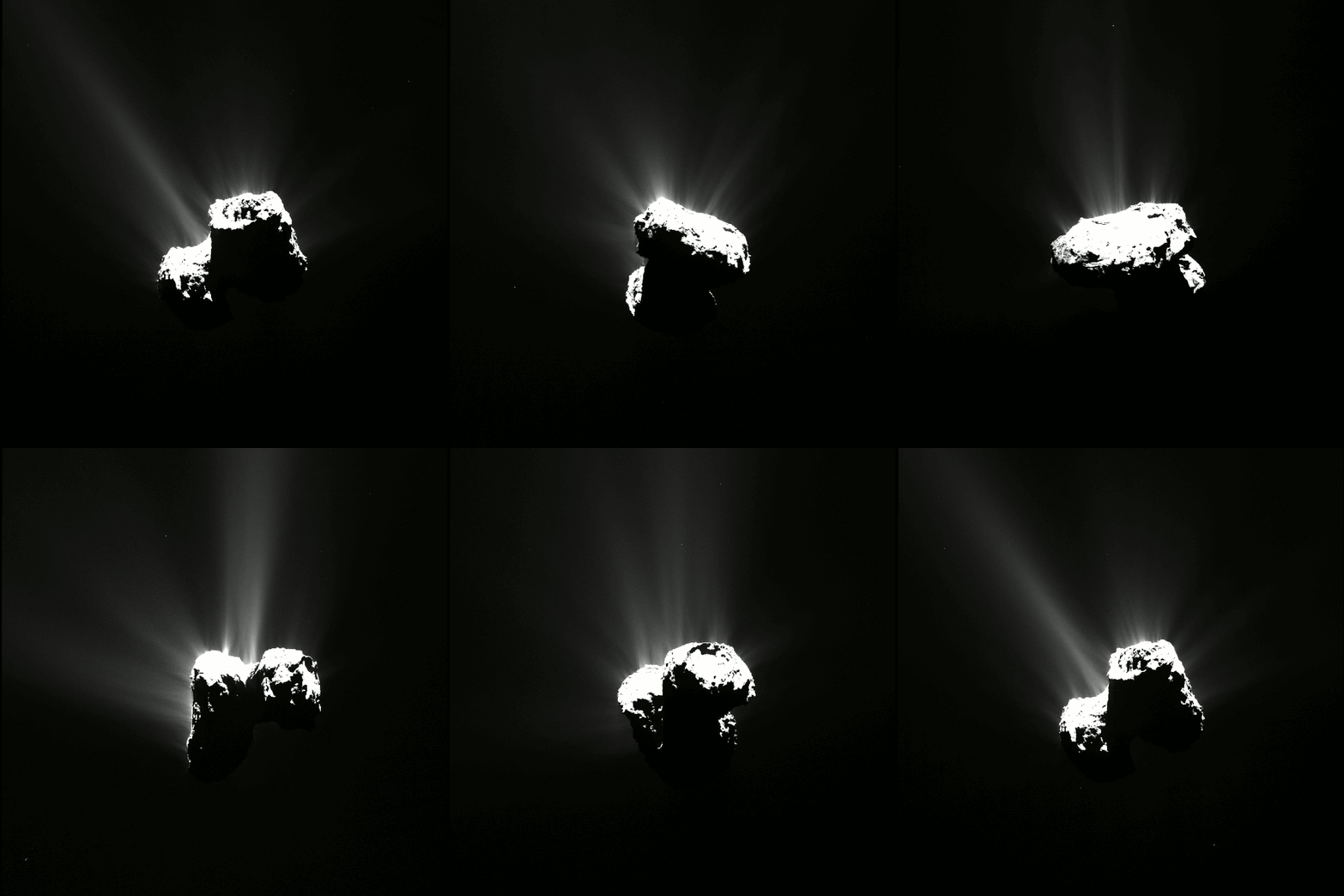
Cometa 67P/Churyumov-Gerasimenko contém ingredientes necessários para a origem da vida

Prebiotic chemicals—amino acid and phosphorus—in the coma of comet 67P/Churyumov-Gerasimenko

Kathrin Altwegg1,2,*, Hans Balsiger1, Akiva Bar-Nun3, Jean-Jacques Berthelier4, Andre Bieler1,5, Peter Bochsler1, Christelle Briois6, Ursina Calmonte1, Michael R. Combi5, Hervé Cottin7, Johan De Keyser8, Frederik Dhooghe8, Bjorn Fiethe9, Stephen A. Fuselier10, Sébastien Gasc1, Tamas I. Gombosi5, Kenneth C. Hansen5, Myrtha Haessig1,10, Annette Jäckel1, Ernest Kopp1, Axel Korth11, Lena Le Roy2, Urs Mall11, Bernard Marty12, Olivier Mousis13, Tobias Owen14, Henri Rème15,16, Martin Rubin1, Thierry Sémon1, Chia-Yu Tzou1, James Hunter Waite10 and Peter Wurz1

+ Author Affiliations

↵*Corresponding author. Email: kathrin.altwegg@space.unibe.ch

Science Advances 27 May 2016:

Vol. 2, no. 5, e1600285


Abstract

The importance of comets for the origin of life on Earth has been advocated for many decades. Amino acids are key ingredients in chemistry, leading to life as we know it. Many primitive meteorites contain amino acids, and it is generally believed that these are formed by aqueous alterations. In the collector aerogel and foil samples of the Stardust mission after the flyby at comet Wild 2, the simplest form of amino acids, glycine, has been found together with precursor molecules methylamine and ethylamine. Because of contamination issues of the samples, a cometary origin was deduced from the 13C isotopic signature. We report the presence of volatile glycine accompanied by methylamine and ethylamine in the coma of 67P/Churyumov-Gerasimenko measured by the ROSINA (Rosetta Orbiter Spectrometer for Ion and Neutral Analysis) mass spectrometer, confirming the Stardust results. Together with the detection of phosphorus and a multitude of organic molecules, this result demonstrates that comets could have played a crucial role in the emergence of life on Earth.

Keywords Origins of life chemistry astronomy comets prebiotic molecules amino acid 67P/Churyumov-Gerasimenko

Copyright © 2016, The Authors

This is an open-access article distributed under the terms of the Creative Commons Attribution-NonCommercial license, which permits use, distribution, and reproduction in any medium, so long as the resultant use is not for commercial advantage and provided the original work is properly cited.

FREE PDF GRATIS: Science Advances

Sequência e fatores epigenéticos determinam a estrutura geral DNA

sexta-feira, maio 27, 2016

Direct evidence for sequence-dependent attraction between double-stranded DNA controlled by methylation

Jejoong Yoo, Hajin Kim, Aleksei Aksimentiev & Taekjip Ha

Affiliations Contributions Corresponding authors

Nature Communications 7, Article number: 11045 doi:10.1038/ncomms11045

Received 17 September 2015 Accepted 16 February 2016 Published 22 March 2016


Abstract

Although proteins mediate highly ordered DNA organization in vivo, theoretical studies suggest that homologous DNA duplexes can preferentially associate with one another even in the absence of proteins. Here we combine molecular dynamics simulations with single-molecule fluorescence resonance energy transfer experiments to examine the interactions between duplex DNA in the presence of spermine, a biological polycation. We find that AT-rich DNA duplexes associate more strongly than GC-rich duplexes, regardless of the sequence homology. Methyl groups of thymine acts as a steric block, relocating spermine from major grooves to interhelical regions, thereby increasing DNA–DNA attraction. Indeed, methylation of cytosines makes attraction between GC-rich DNA as strong as that between AT-rich DNA. Recent genome-wide chromosome organization studies showed that remote contact frequencies are higher for AT-rich and methylated DNA, suggesting that direct DNA–DNA interactions that we report here may play a role in the chromosome organization and gene regulation.

Subject terms: Biological sciences Biochemistry Biophysics Molecular biology

FREE PDF GRATIS: Nature Communications

Porque a ciência precisa quebrar o feitiço do materialismo reducionista

Why science needs to break the spell of reductive materialism

Stuart Kauffman is professor emeritus at the University of Pennsylvania. He was educated in philosophy, psychology and physiology at Dartmouth and Oxford, and obtained his medical degree from UCSF in 1968. He is an affiliate professor at the Institute for Systems Biology in Seattle. His latest book is Humanity in a Creative Universe (2016).

Published in association with Oxford University Press an Aeon Partner

Edited by Corey S Powell


We all sense something deeply deficient in our modern civilisation. Is it an absence of spirituality? Partly. A greedy materialism beyond what we really need? Yes, we are riding the tiger of late capitalism, where we make our living producing, selling and buying goods and services we often do not need on this finite planet. We cannot see ourselves, in part blinkered by unneeded scientism.

The central framework of current physics is that of entailing laws. The central image is the billiard table as boundary conditions and the set of all possible initial conditions of position and momenta of the balls on the table. Then, given Isaac Newton’s laws in differential form, we deduce the deterministic trajectories of the balls. Our model of how to do science is to deduce new consequences, test them, accept or reject the results by diverse criteria, then retain or modify our theories. Science proceeds as Aristotle might have wished, in part as deduction.

My aim is to begin to demolish this hegemony of reductive materialism and its grip on our scientific minds, and a far wider elicitation of a grossly misplaced scientism in modernity. Science is sciencia, knowledge. Being and becoming are more fundamental to all life and our humanity. We are, first of all, alive, and alive in a becoming biosphere. Despite bursts of extinction events and the fact that 99.9 per cent of all species that ever lived are gone, the biosphere flowers on. This flowering of the biosphere, more than a metaphor for human history, begins to suggest a mythic structure beyond that by which we currently live.

At the centre of my argument is a vexing question: since the Big Bang, why has the Universe become complex? I claim that at least part of the answer is that, as more complex things and linked processes are created, and can combine with one another to make yet more complex amalgams of things and processes, the space of possible things and linked processes becomes vastly larger, and the Universe has not had time to make all the possibilities.

Consider just carbon, hydrogen, nitrogen, oxygen, phosphorus and sulphur (CHNOPS), the atoms of organic chemistry. Now consider all possible molecules made of CHNOPS with, say, 100,000 atoms or fewer per molecule. (Coal is such a molecule, and the largest known coal molecule is about 1 × 2 × 1.5 miles somewhere in the United States, a single molecule made only of carbon, with far more than 100,000 carbon atoms.) We do not even know how to count the number of possible molecules containing CHNOPS with up to 100,000 atoms per molecule. But it is easy to see that the Universe cannot have had enough time to make them all.
...

Read more here/Leia mais aqui: Aeon

A seleção natural não sabe distinguir entre mutações benéficas e aleatórias em um ambiente flutuante!

Fate of a mutation in a fluctuating environment


Edited by Boris I. Shraiman, University of California, Santa Barbara, CA, and approved July 27, 2015 (received for review March 17, 2015)

Significance

Evolution in variable environments depends crucially on the fates of new mutations in the face of fluctuating selection pressures. In constant environments, the relationship between the selective effect of a mutation and the probability that it will eventually fix or go extinct is well understood. However, our understanding of fixation probabilities in fluctuating environmental conditions is limited. Here, we show that temporal fluctuations in environmental conditions can have dramatic effects on the fate of each new mutation, reducing the efficiency of natural selection and increasing the fixation probability of all mutations, including those that are strongly deleterious on average. This makes it difficult for a population to maintain specialist adaptations, even if their benefits outweigh their costs.


Abstract

Natural environments are never truly constant, but the evolutionary implications of temporally varying selection pressures remain poorly understood. Here we investigate how the fate of a new mutation in a fluctuating environment depends on the dynamics of environmental variation and on the selective pressures in each condition. We find that even when a mutation experiences many environmental epochs before fixing or going extinct, its fate is not necessarily determined by its time-averaged selective effect. Instead, environmental variability reduces the efficiency of selection across a broad parameter regime, rendering selection unable to distinguish between mutations that are substantially beneficial and substantially deleterious on average. Temporal fluctuations can also dramatically increase fixation probabilities, often making the details of these fluctuations more important than the average selection pressures acting on each new mutation. For example, mutations that result in a trade-off between conditions but are strongly deleterious on average can nevertheless be more likely to fix than mutations that are always neutral or beneficial. These effects can have important implications for patterns of molecular evolution in variable environments, and they suggest that it may often be difficult for populations to maintain specialist traits, even when their loss leads to a decline in time-averaged fitness.


FREE PDF GRATIS: PNAS

Paul Davies 'falou e disse': afirmar que o universo está pululando de biologia é afirmar sem evidência

quinta-feira, maio 26, 2016

Maybe Life in the Cosmos Is Rare After All

The conclusion that the universe is teeming with biology is based on an unproved assumption

By Paul Davies on May 23, 2016


A planet like Kepler 22b could plausibly be habitable—but that doesn't mean it's inhabited Credit: Artists' rendering by NASA/Ames/JPL-Caltech. Public Domain

When I was a student in the 1960s almost all scientists believed we are alone in the universe. The search for intelligent life beyond Earth was ridiculed; one might as well have professed an interest in looking for fairies. The focus of skepticism concerned the origin of life, which was widely assumed to have been a chemical fluke of such incredibly low probability it would never have happened twice. “The origin of life appears at the moment to be almost a miracle,” was the way Francis Crick described it, “so many are the conditions which would have had to have been satisfied to get it going.” Jacques Monod concurred; in his 1976 book Chance and Necessity he wrote, “Man knows at last that he is alone in the indifferent immensity of the universe, whence which he has emerged by chance.”

Today the pendulum has swung decisively the other way. Many distinguished scientists proclaim that the universe is teeming with life, at least some of it intelligent. The biologist Christian de Duve went so far as to call life “a cosmic imperative.” Yet the science has hardly changed. We are almost as much in the dark today about the pathway from non-life to life as Darwin was when he wrote, “It is mere rubbish thinking at present of the origin of life; one might as well think of the origin of matter.”

There is no doubt that SETI – the search for extraterrestrial intelligence – has received a huge fillip from the recent discovery of hundreds of extra-solar planets. Astronomers think there could be billions of earthlike planets in our galaxy alone. Clearly there is no lack of habitable real estate out there. But habitable implies inhabited only if life actually arises.

I am often asked how likely it is that we will find intelligent life beyond Earth. The question is meaningless. Because we don’t know the process that transformed a mish-mash of chemicals into a living cell, with all its staggering complexity, it is impossible to calculate the probability that it will happen. You can’t estimate the odds of an unknown process. Astrobiologists, however, seem more preoccupied with the chances that microbial life will eventually evolve intelligence. Although biologists can’t do the math on that either, at least they understand the process; it is Darwinian evolution. But this is to put the cart before the horse. The biggest uncertainty surrounds the first step—getting the microbes in the first place.
...

Read more here/Leia mais aqui: Blogs Scientific American

A exportação de RNA através do complexo de poros nucleares em eucariotos

quarta-feira, maio 25, 2016

Genes 2015, 6(1), 124-149; doi:10.3390/genes6010124

Review

RNA Export through the NPC in Eukaryotes

Masumi Okamura * , Haruko Inose and Seiji Masuda * 

Division of Integrated Life Science, Graduate School of Biostudies, Kyoto University, Kyoto 606-8502, Japan

* Authors to whom correspondence should be addressed.

Academic Editor: Roz Sandri-Goldin

Received: 28 November 2014 / Revised: 27 February 2015 / Accepted: 10 March 2015 / Published: 20 March 2015


Abstract

In eukaryotic cells, RNAs are transcribed in the nucleus and exported to the cytoplasm through the nuclear pore complex. The RNA molecules that are exported from the nucleus into the cytoplasm include messenger RNAs (mRNAs), ribosomal RNAs (rRNAs), transfer RNAs (tRNAs), small nuclear RNAs (snRNAs), micro RNAs (miRNAs), and viral mRNAs. Each RNA is transported by a specific nuclear export receptor. It is believed that most of the mRNAs are exported by Nxf1 (Mex67 in yeast), whereas rRNAs, snRNAs, and a certain subset of mRNAs are exported in a Crm1/Xpo1-dependent manner. tRNAs and miRNAs are exported by Xpot and Xpo5. However, multiple export receptors are involved in the export of some RNAs, such as 60S ribosomal subunit. In addition to these export receptors, some adapter proteins are required to export RNAs. The RNA export system of eukaryotic cells is also used by several types of RNA virus that depend on the machineries of the host cell in the nucleus for replication of their genome, therefore this review describes the RNA export system of two representative viruses. We also discuss the NPC anchoring-dependent mRNA export factors that directly recruit specific genes to the NPC.

Keywords: RNA export; mRNA; Nxf1; Crm1; Xpot; Xpo5

This is an open access article distributed under the Creative Commons Attribution License (CC BY) which permits unrestricted use, distribution, and reproduction in any medium, provided the original work is properly cited.

FREE PDF GRATIS: Genes

Novo livro: O debate do Design Inteligente e a tentação do cientificismo

terça-feira, maio 24, 2016


The Intelligent Design Debate and the Temptation of Scientism

By Erkki Vesa Rope Kojonen

© 2016 – Routledge

226 pages


About the Book

The controversy over Intelligent Design (ID) has now continued for over two decades, with no signs of ending. For its defenders, ID is revolutionary new science, and its opposition is merely ideological. For its critics, ID is both bad science and bad theology. But the polemical nature of the debate makes it difficult to understand the nature of the arguments on all sides. A balanced and deep analysis of a controversial debate, this volume argues that beliefs about the purposiveness or non-purposiveness of nature should not be based merely on science. Rather, the philosophical and theological nature of such questions should be openly acknowledged.

Hardback: 9781472472502 pub: 2016-05-11

Price: $149.95